

Fascia is the vertical board that runs along the outer edge of your roof, and it serves as the mounting point for your gutters. Soffit is the horizontal panel that covers the underside of your roof overhang, and it often provides the intake ventilation your attic needs. If your gutters sag or your attic traps moisture, one of these two components is usually the reason.
TL;DR:
- Fascia supports gutters’ weight and seals the roof edge, making it susceptible to sagging, rot, or damage from moisture and pests.
- Vented soffit panels with perforations are crucial for attic ventilation; blockages or missing vents can impair airflow and cause moisture buildup.
- Repair is suitable for minor issues like small rot or cracks, but full replacement becomes necessary when structural damage or pest entry points are widespread.
- Coastal climates require soffit and fascia materials resistant to salt air and humidity, with aluminum and composite options offering increased durability.
- Proper installation of vents and inspection for hidden damage, often involving contractor removal of fascia, prevents long-term problems and enhances roof system performance.
Table of Contents
- What Is Fascia and Why It Matters for Your Gutters
- What Is Soffit and How It Ventilates Your Attic
- Soffit vs Fascia: Key Differences at a Glance
- Choosing Materials That Hold Up in Your Climate
- When to Repair and When to Replace
- Getting Attic Ventilation Right Through Your Soffit Vents
- What to Expect From Installation and Repair Work
- What Twenty Years of Roofline Repairs Taught Us
- How Five Star Aluminum Can Handle Your Soffit and Fascia Project
- FAQ
- Sources
What Is Fascia and Why It Matters for Your Gutters
Fascia sits perpendicular to the ground, running in a straight line just below the edge of your roofline. From the ground, look for the board where your gutters attach, right where the roof meets the exterior wall. Fascia does more than hold gutters in place. It seals the edge of your roof deck from the weather and gives your home’s roofline a finished look, which matters for curb appeal and structural protection alike.
Because fascia carries the weight of your gutters, especially when they fill with rainwater or debris, it takes on stress that other trim boards never see. Watch for these warning signs during a walk around your home:
- Gutters that sag, pull away from the roofline, or pool water
- Paint that bubbles, peels, or looks chalky near the roof edge
- Soft spots, visible rot, or dark staining on the board itself
- Loose or lifted flashing where the fascia meets the roof
What Is Soffit and How It Ventilates Your Attic
Soffit runs horizontally and fills the gap under your eaves, parallel to the ground rather than standing up against it. It comes in a few finishes: solid panels, beaded boards for a traditional look, or vented panels with small perforations that let outside air reach your attic. Soffit does two jobs at once. It closes off the underside of your roof from squirrels, wasps, and other pests, and when vented, it feeds fresh air into your attic as part of a balanced ventilation system.
A few quick checks confirm what kind of soffit you have:
- Tiny, evenly spaced holes or slots across the panel usually mean it is vented
- A smooth, unbroken surface with no perforations means it is solid
- Discoloration or dripping marks below the soffit often point to a moisture problem above it
Soffit vs Fascia: Key Differences at a Glance
Once you know what to look for, telling these two apart takes seconds. Fascia stands vertical and visible from the street. Soffit lies flat and hides underneath the eave, so you typically need to look up and back to see it clearly.
- Orientation: Fascia is vertical and faces outward; soffit is horizontal and faces downward.
- Primary job: Fascia anchors your gutters and seals the roof edge; soffit ventilates the attic and blocks pests.
- Failure impact: A failing fascia board drops your gutters and lets water behind your siding; a failing soffit lets moisture and pests into your attic space.
During an inspection, run through this list:
- Check fascia for sagging gutter brackets or visible wood rot
- Check soffit for cracked panels, sagging sections, or missing vent covers
- Look for daylight gaps between soffit and fascia, a sign of settling or poor installation
- Note any wasp nests or rodent entry points, both common at soffit joints
Choosing Materials That Hold Up in Your Climate
Wood offers a classic look and takes paint well, but it rots quickly in humid or rainy climates and needs regular upkeep. Aluminum resists rust and salt air, holds up with minimal maintenance, and is a common choice in coastal regions, though it can dent under hard impact. Vinyl and uPVC cost less upfront and never need painting, but they can warp or sag in extreme heat. Composite materials split the difference: more durable than wood, often pricier than vinyl, and increasingly popular where storms and moisture are a regular concern.
- Wood: attractive and paintable, but prone to rot without diligent maintenance
- Aluminum: durable, low-maintenance, salt-air resistant, but can dent
- Vinyl/uPVC: affordable and maintenance-free, but can warp in heat
- Composite: strong and moisture-resistant, usually a mid-to-high price point
According to homeowner guides, soffit replacement runs roughly $20 to $30 per linear foot, while fascia replacement runs about $15 to $25 per linear foot. Total project cost depends heavily on linear footage, roofline height, and how much rotted framing a contractor finds once the old material comes off.
When to Repair and When to Replace
Small, isolated problems like a single cracked soffit panel or one spot of surface rot usually call for a targeted repair. Structural rot, repeated leaks, or soffit that has pulled away in multiple sections point toward a full replacement instead. Watch for these symptoms:
- Soft, spongy wood that gives under light pressure
- Wet or matted insulation visible near the eaves
- Signs of pests, nests, or chewed openings along the soffit line
- Bubbled or peeling paint that keeps returning after touch-ups
Pro Tip: If you find rot in one spot but the surrounding wood feels solid, a patch repair now can buy you years before a full replacement is needed.
Working at roof height carries real fall risk, and spotting hidden rot takes experience. A licensed contractor can assess the full scope safely and give you an accurate repair versus replace recommendation.
Getting Attic Ventilation Right Through Your Soffit Vents
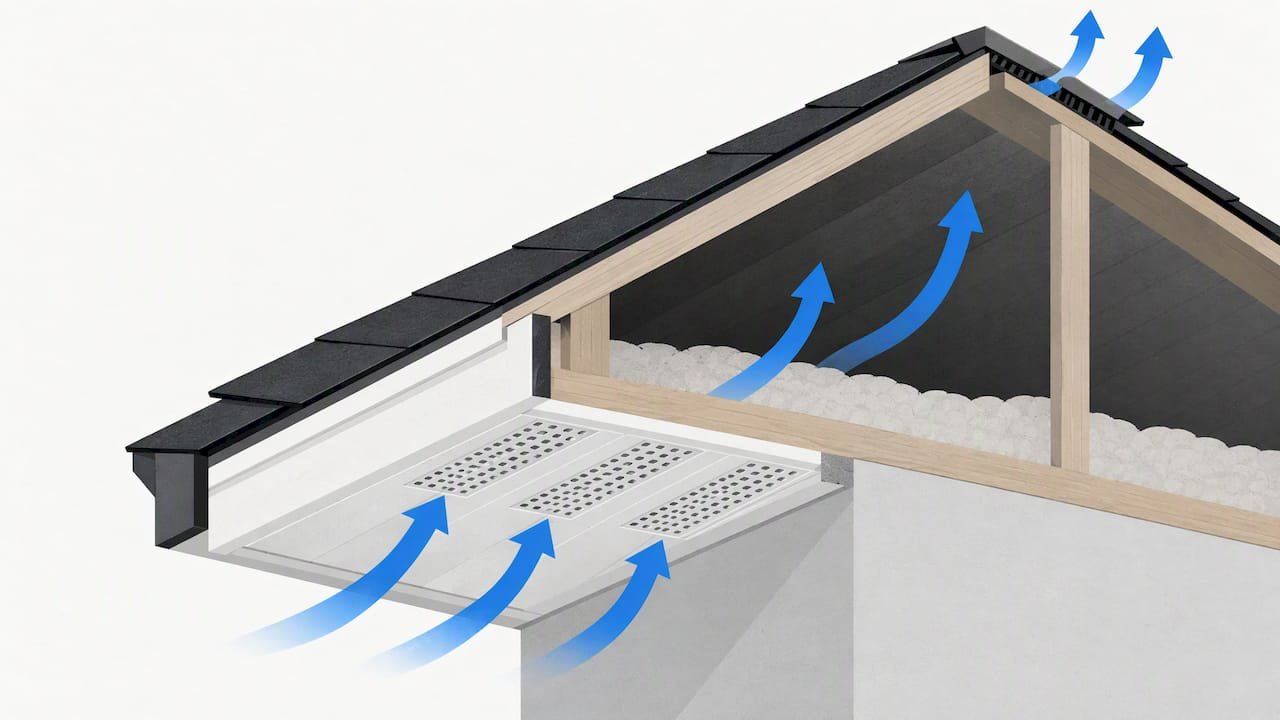
Attic ventilation works on a simple principle: cool air enters low through soffit vents, warm air exits high through a ridge or other exhaust vent, and the two need to stay roughly balanced. Building America guidance recommends continuous soffit vents paired with ridge venting as the most reliable approach, with many codes using a 1-to-300 net free vent area as a baseline.
Common mistakes undercut this balance fast:
- Insulation piled against the soffit opening, blocking airflow entirely
- Missing rafter baffles, which let insulation drift and seal off the vent path
- Intake and exhaust vent areas that do not match, leaving one side starved
Fixes are usually straightforward: install rafter baffles at each bay, switch to continuous soffit venting where possible, and pair it with adequate ridge exhaust. Worth noting, mechanical attic fans are not always the right fix since they can pull conditioned air out of your living space; air sealing and proper insulation often solve moisture problems more effectively.
What to Expect From Installation and Repair Work
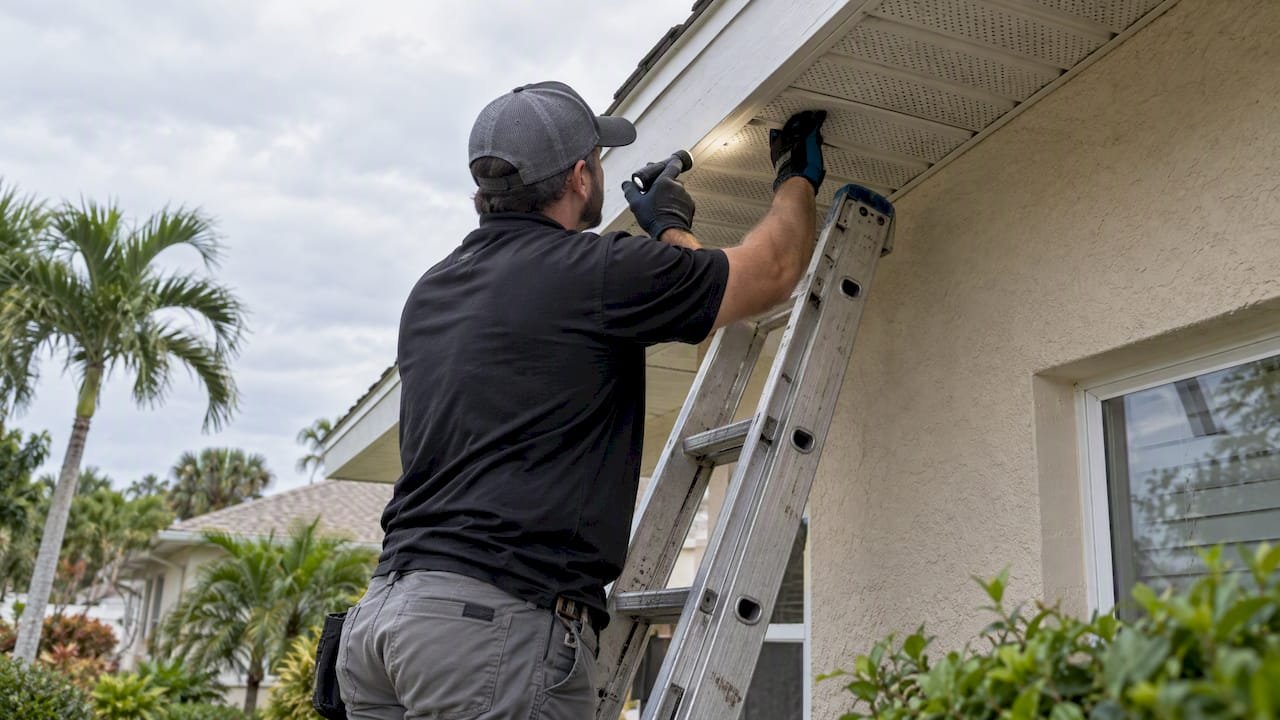
Flexible vinyl soffit can sometimes slide into place without disturbing the fascia, but many professionals remove the fascia anyway to check for hidden rot and get a cleaner fit. Working this high off the ground also means real ladder and fall risks, especially on two-story eaves, which is one reason most homeowners hand this job to a pro.
- A contractor inspects both soffit and fascia for rot, pest damage, and ventilation gaps.
- Damaged wood gets removed and replaced before any new material goes on.
- The ventilation path gets checked and corrected if baffles or vent area fall short.
- Gutters get reattached securely once the new fascia is in place.
What Twenty Years of Roofline Repairs Taught Us
Most soffit and fascia problems start small and get ignored until they are not small anymore. Catch sagging gutters or a cracked vent panel early, and you save real money later. Fix active leaks and rot before worrying about paint color. Once you spot structural damage or the eaves are too high to inspect safely, bring in a qualified contractor rather than guessing.
— Brian
How Five Star Aluminum Can Handle Your Soffit and Fascia Project
We built our business around Florida’s climate, which means we know exactly how salt air and storm humidity wear down soffit and fascia faster than almost anywhere else. Our soffit and fascia installation and repair services use materials chosen for that exact kind of wear, backed by over 20 years of hands-on experience across Sarasota and nearby counties.

When we inspect your roofline, we check gutters, soffit, fascia, and attic ventilation together, since a problem in one usually traces back to another. We do not consider a job finished until you are satisfied with the result.
- Soffit and fascia installation and repair using salt-air-resistant materials
- Attic ventilation improvement to correct blocked or unbalanced vents
- Gutter installation and cleaning to round out full roofline protection
| What you get | Why it matters |
|---|---|
| Lifetime No-Clog Guarantee | Long-term protection without repeat service calls |
| Salt-air-resistant materials | Built for coastal Florida conditions |
| Over 20 years of experience | Skilled inspection and installation on every job |
If your fascia is sagging or your attic feels stuffy in summer, request a free estimate from our services page and we will walk your roofline with you before any work begins.
FAQ
What does a soffit look like?
A soffit is the flat panel running underneath your roof overhang, parallel to the ground rather than standing upright. It can be solid, beaded for a traditional look, or perforated with small vents that allow airflow into the attic.
Why is soffit so expensive?
Soffit pricing reflects material, linear footage, and how much hidden rot a contractor finds once old panels come down. Homeowner guides put installed soffit costs around $20 to $30 per linear foot, with full project totals rising when underlying framing needs repair too.
Do roofers replace fascia and soffits?
Many roofing and exterior contractors handle both, since the two components are installed and inspected together. Professionals often remove fascia during a soffit replacement to check for hidden damage and ensure a secure fit, even when the soffit material itself could technically go in without that step.
What are the downsides of soffits?
Soffit, especially vented styles, can let in moisture or pests if panels crack or vents get blocked by debris or insulation. Poorly installed soffit vents without rafter baffles can also fail to deliver the airflow your attic needs, undermining the ventilation they are meant to provide.
Do Five Star Aluminum’s guarantees cover soffit and fascia work?
Yes, our Lifetime No-Clog Guarantee and satisfaction commitment apply to the soffit and fascia services we install, alongside our broader gutter and exterior work across Sarasota and nearby counties.
Sources
- Exprealty
- Measure Guideline: Guide to Attic Air Sealing (DOE / Building America)
- Extension
- Why Soffits and Fascias Are Important (HGTV)
- Should soffit and fascia be replaced after gutters? (Angi)