

Pool cage gutters, often called super gutters, are structural gutters that both drain water and help support a screened enclosure, and they belong in a different category than ordinary eave gutters. We recommend installing or replacing them through a qualified contractor whenever fascia is deteriorating, the enclosure load demands it, or existing anchors are compromised. Gutter guards reduce debris but never remove the need for regular inspections.
TL;DR:
- Gutter size should match enclosure size and local rainfall, with 5-inch handling smaller loads and 7-inch suitable for heavy rain regions.
- Heavy-gauge aluminum and certified anchors are required for durability, coastal resistance, and to meet wind standards in high-wind areas.
- Gutter guards reduce debris but still require routine manual cleaning, especially at downspout elbows where most clogs occur.
- Repairs are economical when fascia and anchors are intact, but widespread damage or rot necessitate full gutter replacement.
- Hiring experienced contractors ensures proper installation, adherence to local codes, and long-term structural and drainage safety.
Table of Contents
- What Pool Cage Gutters Are and Why They Matter
- Sizes, Materials, and Finishes: Choosing 5-Inch vs 7-Inch
- Gutter Guard Options and Realistic Maintenance Expectations
- Typical Costs, Cost Drivers, and When to Repair vs. Replace
- How to Choose a Contractor: Questions, Red Flags, and Estimates
- Practitioner Perspective: Common Fixes and Our Guarantees
- Installation Process and Typical Timeline
- Maintenance Tips Beyond Gutter Guards
- How Local Climate Affects Gutter Selection and Upkeep
- Compatibility With Different Pool Cage Styles
- Warranty and Service Options to Expect
- Our Recommendation and Next Step
- Request a Quote From Five Star Aluminum
- FAQ
- Sources
What Pool Cage Gutters Are and Why They Matter
A super gutter does two jobs at once. It channels rainwater away from the pool deck, and it provides a structural ledge that many screened enclosures rely on for support along the fascia line. Standard eave gutters only move water. Super gutters are formed from heavier aluminum and fastened with engineered anchors that tie into the home’s fascia board and the enclosure’s framing, which is why a failure here can affect both drainage and the stability of the cage itself.
Common failure modes include fascia rot behind the gutter, loosened or corroded anchors, and in the worst cases a partially detached cage section after a storm. These problems develop slowly and are easy to miss until they become expensive.
Watch for these signs during a routine walk around your enclosure:
- Visible sagging or waviness along the gutter line
- Soft or discolored fascia board behind the gutter
- Water staining or dripping at seams during rain
- Loose screws, rust streaks, or gaps where the gutter meets the frame
Sizes, Materials, and Finishes: Choosing 5-Inch vs 7-Inch
Gutter size depends mostly on enclosure footprint and local rainfall intensity. A 5-inch super gutter handles smaller cages and lighter rain loads, while a 7-inch profile is better suited to larger enclosures or regions with heavier downpours, since it moves a greater volume of water per minute without overflowing at the seams.
Material choice matters as much as size. Heavier aluminum gauges resist bending under wind load and ladder contact, and in coastal or salt-air environments, alloy selection affects how long the gutter resists pitting and corrosion. Finish plays a role too:
- Powder-coated finishes resist fading and chalking longer than mill finish
- Anodized options add a harder surface layer for high-exposure sites
- Matching the finish to your cage frame keeps the look consistent
Wind-rating documentation and Notice of Acceptance (NOA) paperwork are often required in coastal or high-wind jurisdictions, and heavier-gauge aluminum and approved connectors raise upfront cost but are typically necessary for inspections and insurance credit, according to a Florida pool cage cost breakdown.
Gutter Guard Options and Realistic Maintenance Expectations
Gutter guards for pool cage gutters fall into a few categories, and not all of them hold up well on a structural gutter system.
- Micro-mesh guards block fine debris well but need periodic professional cleaning because pollen and grit can mat into a dense residue over time.
- Reverse-curve or cover systems shed leaves effectively but can struggle with heavy debris loads and may need inspection after storms.
- Foam and brush inserts are generally discouraged on super gutters because they trap moisture against the aluminum and can accelerate corrosion.
Even well-chosen guards do not eliminate cleaning. A review of guarded homes found that most clogs still occur at downspout elbows that guards never cover, and guarded systems in that sample still required hand clearing. A separate account from a longtime contractor makes a similar point: a disciplined manual cleaning schedule can outperform an expensive guard system over a ten-year horizon for many properties, because material spec matters more than marketing claims.
Match guard type to your property. Heavy tree cover favors micro-mesh with scheduled professional checks, while open-sky properties may do fine with a basic cover system and twice-yearly cleaning.
Pro Tip: Check downspout elbows separately from the gutter trough itself. That junction is where most hidden clogs actually form, guard or no guard.
Typical Costs, Cost Drivers, and When to Repair vs. Replace
Budgeting for pool cage gutter work starts with understanding the range. A typical re-screen on a 1,200 square foot cage runs $1,200 to $3,800, while full pool cage replacement runs $14,000 to $35,000 or more depending on size and complexity. Isolated structural repairs, such as fixing bent uprights or re-tightening hubs after a storm, commonly fall in a narrower band within that same source’s cost breakdown.
Several factors push a quote up or down:
- Cage size and gutter length drive material quantity directly
- Aluminum gauge and wind-rating/NOA requirements add engineering and material cost
- Existing deck and fascia condition affect labor hours and prep work
- Permit requirements vary by jurisdiction and project scope
Isolated repairs make sense when the fascia is sound, anchors are intact, and damage is limited to a single bent section or a few loose connectors. Full replacement becomes the better call when fascia rot is widespread, multiple anchor points have failed, or the gutter and frame are both past their service life. If you are already seeing signs your gutters need replacing, a repair quote should still include an honest assessment of whether that repair will hold.
Because every enclosure sits on different framing, soil, and slab conditions, accurate pool cage pricing requires a site visit. Online calculators give a ballpark figure at best.
How to Choose a Contractor: Questions, Red Flags, and Estimates
Hiring the right contractor matters more on super gutters than on standard gutter work, since mistakes here touch both drainage and structural safety. Ask these questions before signing anything:
- How many pool cage or super gutter projects have you completed, and can you show examples?
- Does your work meet local wind-rating or NOA requirements, and can you document that?
- Are you licensed, insured, and able to pull the required permits?
- What does your warranty cover, and for how long?
- Can you provide references from similar local projects?
A proper site visit includes measuring the deck footprint, checking fascia and anchor condition, and noting any overhead obstructions. Your estimate should itemize materials, labor, and any permit fees separately rather than arriving as a single lump figure.
Red flags include a contractor who cannot show past project photos, dodges direct questions about anchors or warranty terms, or pushes you hard toward the most expensive guard system before assessing your actual debris load.
Pro Tip: Ask every bidder the same five questions in the same order. Inconsistent answers between contractors reveal more than any single sales pitch.
Practitioner Perspective: Common Fixes and Our Guarantees
In our experience, the two mistakes we see most often are fascia rot left untreated behind an aging gutter and anchors that were never rated for the cage load in the first place. Both are fixable when caught early, and both get expensive when ignored.
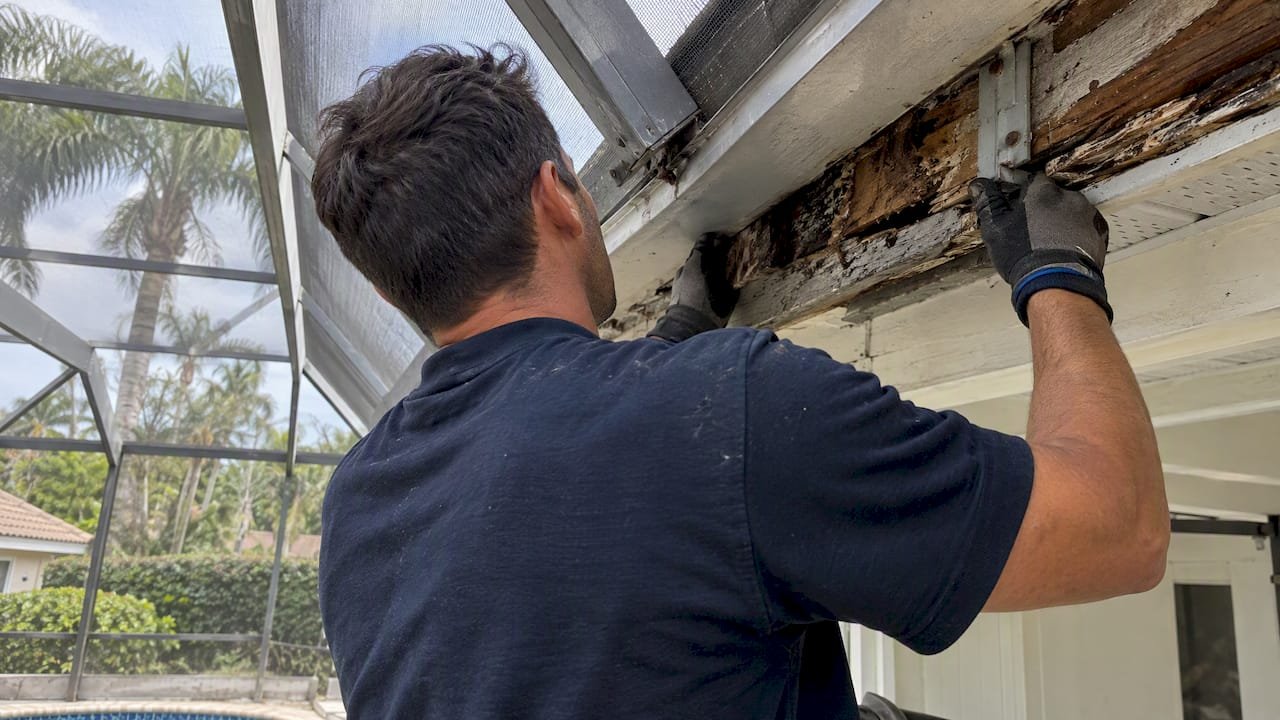
Our relevant services include gutter installation, gutter replacement, gutter guard installation, downspout installation, and soffit and fascia repair, with a guarantee that reflects our confidence in how we spec and install this work.
Installation Process and Typical Timeline
A super gutter project usually starts with a measurement visit, where we document cage dimensions, fascia condition, and anchor points before writing a quote. Once you approve the scope, material ordering for custom-fabricated aluminum sections typically takes a short lead time, since seamless gutter stock is formed to the exact run length rather than pieced together.
Installation day itself involves removing the old gutter and inspecting the fascia board underneath for rot, since this hidden area is where many problems originate. Any damaged fascia gets replaced before the new gutter goes up, because fastening a structural gutter to compromised wood defeats the purpose of the upgrade. Anchors are then set to match the cage’s load requirements, the new gutter sections are fitted and sealed at the seams, and downspouts are connected to carry water to an appropriate discharge point away from the deck and foundation.
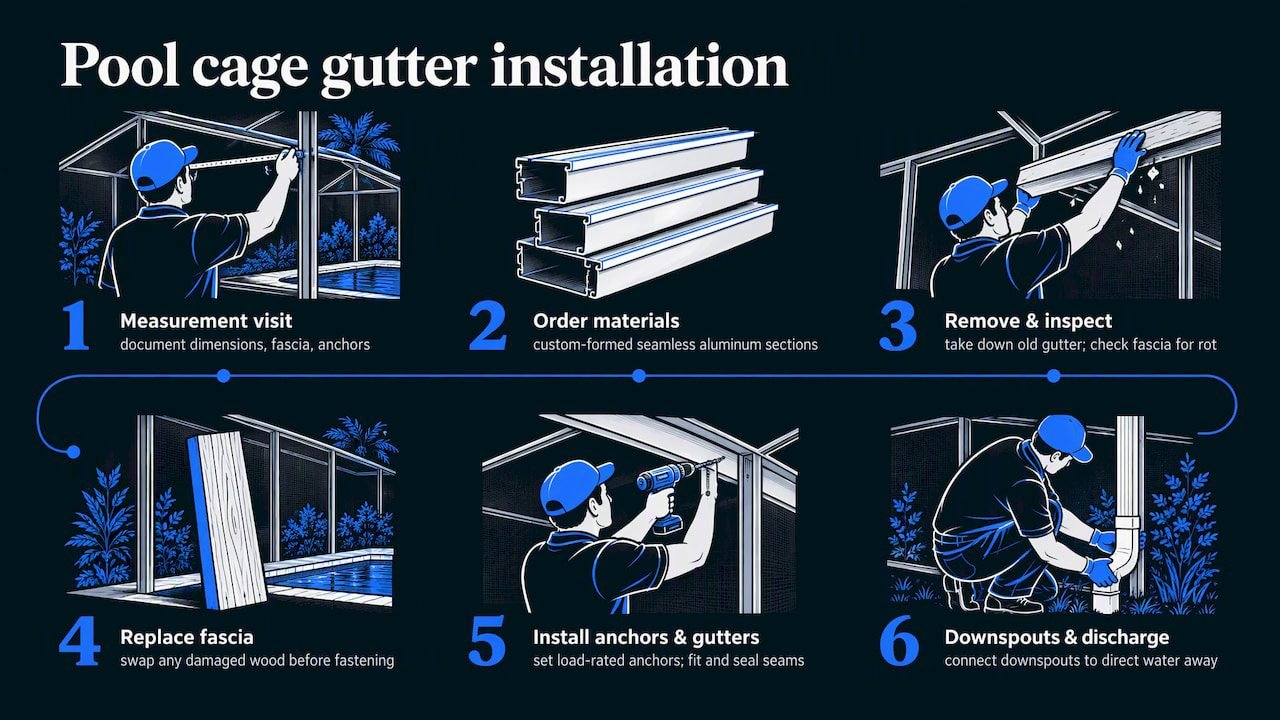
For most residential cages, the full process from final measurement to completed installation runs a matter of days rather than weeks, assuming no major fascia or framing surprises turn up once the old gutter comes down. Permit timing, when required, can add to the schedule depending on your local jurisdiction. A clear downspout installation plan as part of this process keeps water moving away from the slab instead of pooling at the base of the cage.
Maintenance Tips Beyond Gutter Guards
Guards reduce debris, but a few habits do more for long-term performance than the guard choice itself. Rinse the gutter trough and downspout outlets at least twice a year, and more often under heavy tree cover, to clear fine grit that guards do not stop.
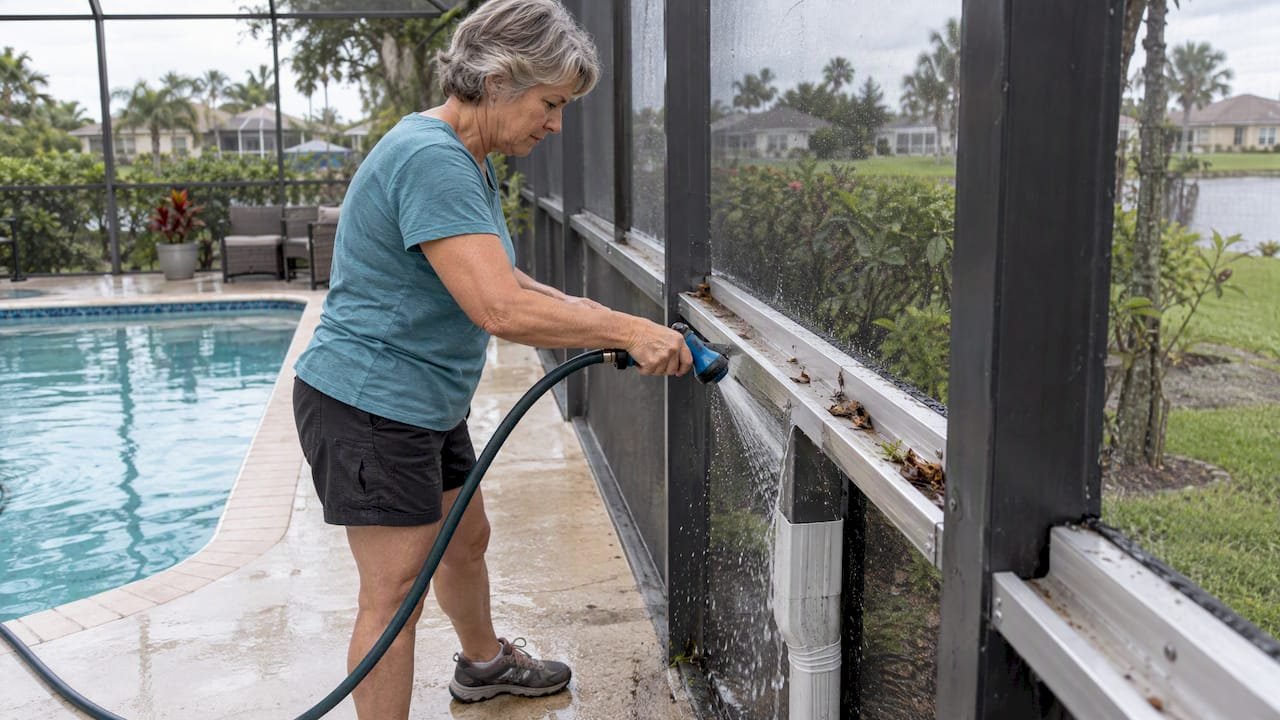
Check fastener points and seams during each cleaning pass rather than waiting for a visible leak, since small gaps are far cheaper to reseal early than after water has reached the fascia. Clear downspout elbows specifically, since that junction is where the bulk of hidden clogs form regardless of guard type.
After any significant storm, walk the gutter line and look for new sagging, loosened anchors, or debris piles that formed faster than usual. A quick seasonal inspection paired with the cleaning schedule above catches most problems while they are still minor repairs. For a broader cleaning checklist, our maintenance tips for seamless gutters page covers the same principles for standard gutter runs.
How Local Climate Affects Gutter Selection and Upkeep
Rainfall intensity and sun exposure both shape which gutter size and finish make sense for your property. Areas that see frequent heavy downpours benefit from the larger 7-inch profile discussed earlier, simply because it moves more water per minute without backing up at the seams.
UV exposure affects finish longevity more than most homeowners expect. Powder-coated aluminum resists fading and surface breakdown far better than mill finish under constant sun, which matters most on south and west-facing enclosure walls. Salt air common in coastal zones accelerates corrosion on lower-grade aluminum, making alloy choice and finish quality a bigger factor in total lifespan than in inland climates.
Wind exposure ties back to the wind-rating and NOA requirements covered earlier: a gutter and anchor system engineered for your local wind zone holds up through storm season instead of becoming a repeat repair item.
Compatibility With Different Pool Cage Styles
Super gutters work across the common pool cage styles, but the details shift with design. A standard hip-roof cage typically uses a continuous gutter run along the low eave line, while a flat or low-pitch screen room may need a wider gutter profile to handle the reduced water velocity across a flatter roof surface.
Picture-window or panoramic cage designs, which use fewer vertical supports, place more load on the fascia and gutter anchoring system since there are fewer framing members sharing the structural work. That makes anchor quality and fascia condition even more important to verify before installation.
Older cages retrofitted with a new super gutter sometimes need frame adjustments where the original beam spacing does not match current anchor hardware, which is part of why a site visit before quoting matters as much as it does. Our gutter installation in Parrish page walks through how this fitting process looks in practice for a typical residential cage.
Warranty and Service Options to Expect
Warranty terms vary meaningfully between manufacturers and installers, and the details matter more than the headline length. Look for coverage that spells out what happens with a clogged system, a finish defect, or an anchor failure, rather than a vague blanket statement.
We back our installations with a Lifetime No-Clog Guarantee, reflecting confidence that comes from more than 20 years in the gutter and exterior trade. Beyond the initial installation, ongoing service options such as scheduled cleaning, storm damage restoration, and repair work matter just as much as the original warranty, since a gutter system is only as good as the upkeep behind it.
When comparing bids, ask what triggers a warranty claim and how quickly a service call typically gets scheduled. A contractor confident in their installation quality will answer both questions plainly.
Our Recommendation and Next Step
Treat your pool cage gutter as structural work, not a cosmetic upgrade. When fascia is soft, anchors are loose, or your enclosure has been through a few storm seasons without an inspection, bring in an experienced installer rather than patching it yourself.
If that describes your situation, schedule a site visit. A trained eye will tell you in one visit whether you are looking at a repair or a replacement.
— Brian
Request a Quote From Five Star Aluminum
We handle the full range of work covered in this guide, from a straightforward repair to a complete super gutter replacement. Our relevant services include:
- Gutter installation and gutter replacement for failing or undersized super gutters
- Gutter guard installation matched to your tree cover and debris load
- Downspout installation that routes water cleanly away from the pool deck
- Soffit and fascia repair to address rot before it compromises your gutter anchors

Every installation we complete carries a Lifetime No-Clog Guarantee. If your pool cage gutter shows any of the warning signs covered above, request a quote through our services page and we will schedule a site visit to give you a straight answer and an itemized estimate.
FAQ
How much does a pool birdcage cost?
A full pool cage replacement typically runs $14,000 to $35,000 or more, while a simple re-screen on a 1,200 square foot cage runs $1,200 to $3,800. Size, aluminum gauge, and wind-rating requirements are the biggest factors behind where a given project lands in that range.
What is the downside of gutter guards?
Guards reduce debris buildup but do not eliminate cleaning, since most clogs still form at downspout elbows that sit below the guard itself. Micro-mesh systems in particular can still need periodic professional cleaning once pollen and grit mat together on the surface.
What are the different types of pool gutters?
Pool cage gutters mainly come in 5-inch and 7-inch structural profiles, chosen based on enclosure size and local rain intensity, with options in aluminum gauge, alloy, and powder-coat or anodized finish. Guard styles layered on top include micro-mesh, reverse-curve covers, and foam or brush inserts, though foam and brush are generally discouraged on structural super gutters.
What is the point of a pool cage?
A pool cage keeps debris, insects, and excess sun exposure off the pool and deck while the structural gutter along its base both drains rainwater and helps support the enclosure frame. The two functions work together, which is why gutter failure on a pool cage is treated as a structural concern rather than a simple drainage fix.
Sources
- Florida Pool Cage Replacement Cost (2026): $1,200–$35K Guide | BuildPriced
- Do gutter guards work? What we found under the guards on 7 homes
- Guttering
- Pool Cage Cost: Realistic Price Ranges, Size Drivers, and Local Factors 2026 – Well Built Florida