

Clean your gutters at least twice a year, once in fall and once in spring, to keep water flowing away from your roof and foundation. Homes with many overhanging trees, pine needles, frequent storms, or wildfire exposure need cleaning more often, sometimes quarterly. Outside that schedule, clean right away after a major storm or whenever you spot overflow or sagging.
When To Clean Gutters
- Clean in fall after leaves drop but before the first hard freeze, then in spring after pollen and seed pods fall but before heavy rains.
- At each cleaning, flush downspouts, inspect seams, end caps, and hangers for leaks or looseness, and confirm extensions direct water away from the foundation.
- Pooling near the foundation, new basement dampness, ice dams, or localized roof leaks signal drainage trouble and warrant action before the next seasonal appointment.
- Guards reduce large debris, but pollen, grit, and pine fragments can still collect; inspect guarded gutters once or twice yearly, with extra attention to mesh.
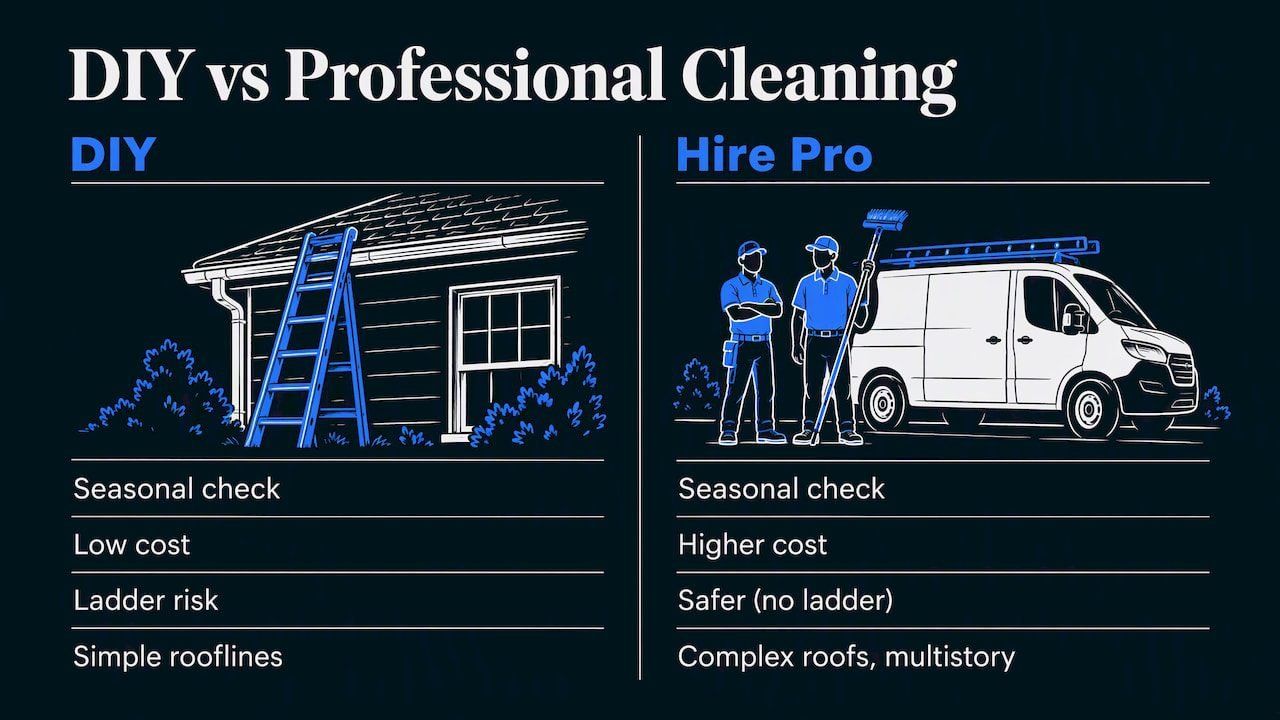
- Hire a professional for multistory homes, steep or complex roofs, damaged gutters, heavy storm debris, or structural movement that makes ladder work unsafe.
Table of Contents
- Your seasonal gutter cleaning schedule and checklist
- What factors mean you need more than two cleanings a year
- Signs you need to clean your gutters right now
- How to clean gutters safely, and when to call a professional
- Do gutter guards reduce how often you need to clean?
- What happens if you skip gutter maintenance
- A practical take on the mistakes we see most
- FAQ
- Sources
Your seasonal gutter cleaning schedule and checklist
A twice-yearly rhythm works for most homes, but timing matters as much as frequency. Maintenance professionals and homeowner guides consistently point to fall and spring as the two anchor cleanings because those windows catch debris before it causes damage.
Fall: clean after most leaves have dropped but before the first hard freeze. This timing matters because clearing gutters ahead of freezing temperatures reduces the risk of ice dam formation later in winter. While you are up there, check hangers and outlets for looseness.
Spring: clean once seed pods and pollen have finished dropping and before heavy spring rains arrive. This clears winter debris and gives you a chance to inspect for any damage the cold season left behind.
Homes with multiple stories or complex rooflines accumulate debris faster and cost more to service professionally, so factor your home’s height and roof design into how often you schedule a check. A simple checklist keeps each cleaning consistent:
- Clear leaves, twigs, and granules from the gutter channel.
- Flush downspouts with a hose to confirm free flow.
- Inspect seams, end caps, and hangers for looseness or leaks.
- Check splash blocks and extensions to confirm water drains away from the foundation.
What factors mean you need more than two cleanings a year
The twice-a-year rule is a starting point, not a universal rule. Several factors push homes toward more frequent attention.
- Tree cover: Homes surrounded by many overhanging trees, especially pines that drop needles year round, often need quarterly cleaning instead of twice yearly.
- Climate: Regions with heavy rainfall, frequent storms, or snowy winters put more strain on gutters and shorten the safe interval between cleanings.
- Roof size and complexity: Larger roofs and multiple roof planes funnel more water and debris into the gutter system, filling it faster.
- Gutter material and age: Older seamed gutters and sections with sagging slopes trap debris at low points, creating clogs sooner than a well-maintained seamless system.
- Visible re-accumulation: If gutters fill back up noticeably within a single season, that pattern itself is a signal to shorten your interval.
Pro Tip: Walk your property after a windy day and look up at the gutter line from the ground. If you can see debris poking over the edge, it is already time for a cleaning, regardless of the calendar.
Signs you need to clean your gutters right now
Between scheduled cleanings, certain signs mean you should not wait for the next seasonal check.
- Overflowing water during rainfall or streaking stains running down your siding, both of which point to a blockage upstream.
- Visible plant growth, sagging sections, or gutters pulling away from the fascia, which signal both debris buildup and possible structural strain.
- Pooling water near your foundation or new basement dampness after a storm, which suggests water is not being carried away properly.
- Ice dams or localized roof leaks in cold weather, which often trace back to clogged gutters that trapped melting snow.
Any one of these is worth acting on immediately rather than waiting for the next fall or spring slot.
How to clean gutters safely, and when to call a professional
Gutter cleaning is simple work in concept, but ladder falls make it one of the more dangerous routine home maintenance tasks, which is why safety steps matter as much as the cleaning itself.
- Set up safely: Use a sturdy, properly footed ladder on level ground, wear gloves and eye protection, and never work alone on a tall ladder.
- Watch for hazards: Stay alert for power lines near the roofline and avoid working in wet or windy conditions.
- Clear the debris: Remove large material by hand into a bucket, then flush the channel with a hose from the far end toward the downspout to confirm water moves freely.
- Inspect as you go: Check hangers, seams, and outlets for looseness, leaks, or separation, and tighten or flag anything that needs repair.
When to call a professional: multistory homes, steep or complex rooflines, visibly damaged or sagging gutters, heavy post-storm debris, or any sign of structural movement are all good reasons to bring in a crew rather than risk a ladder yourself. For repairs beyond a simple cleaning, our gutter repair service handles damaged sections and storm cleanup.
One caution on who you hire: Consumer Reports warns that unusually cheap door-to-door gutter cleaning offers are a common scam tactic, with elderly homeowners frequently targeted. Verify credentials and avoid any offer that seems far below a normal service call before letting someone on your roof.
Do gutter guards reduce how often you need to clean?
Gutter guards cut down on large debris, but they do not remove cleaning from your calendar entirely. Mesh, foam, surface-tension, and reverse-curve designs each block leaves and larger material differently, while finer debris like pollen, grit, and pine needle fragments can still collect on top or seep through.
- Mesh guards block most leaves but need periodic brushing to clear fine debris sitting on the surface.
- Foam inserts fill the channel opening and can trap small particles inside the foam itself over time.
- Surface-tension and reverse-curve guards shed most debris off the roofline but still benefit from an annual visual check.
With guards installed, most homes can shift to one or two inspections a year instead of full cleanings, though heavy-debris properties still warrant a closer look each season. FEMA notes that metal mesh components accumulate debris and need their own upkeep, and recommends noncombustible materials in wildfire-prone areas.
Pro Tip: If you are weighing guards, ask whether the product is rated noncombustible, especially if you live near wildland areas where ember intrusion is a real risk.
What happens if you skip gutter maintenance
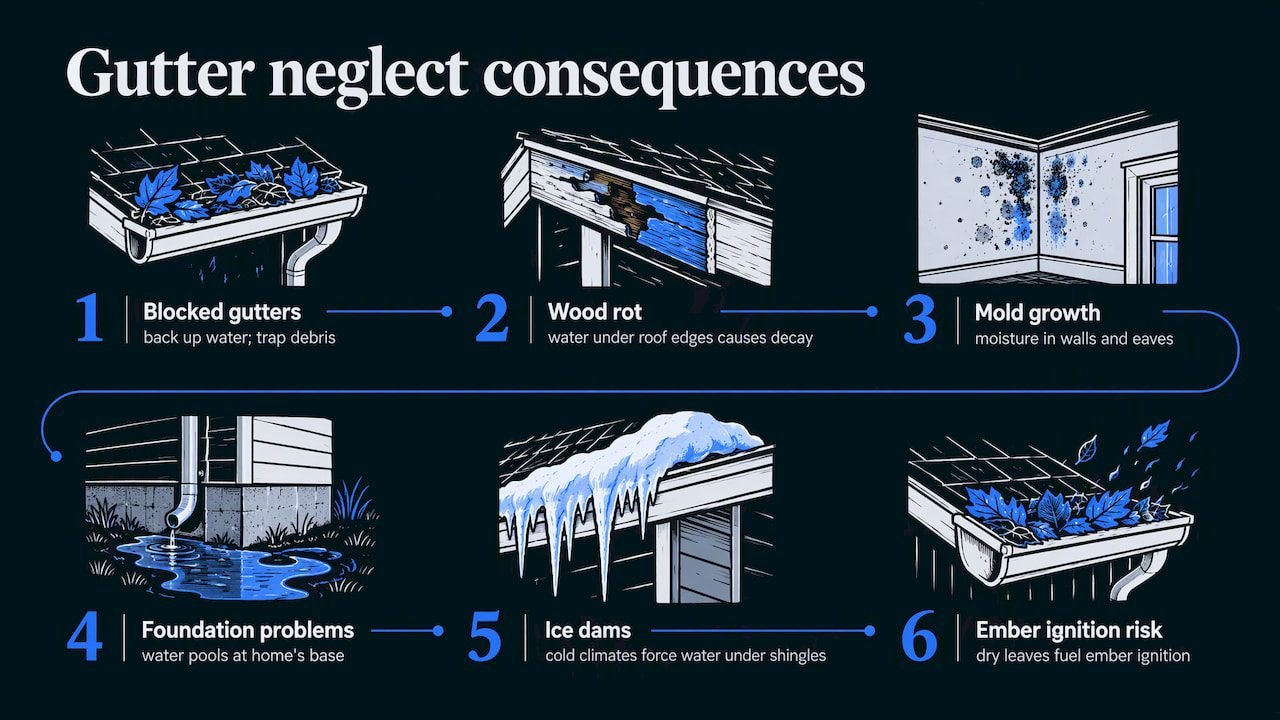
Blocked gutters back water up under roof edges and down exterior walls, leading to wood rot, mold growth, and, over time, foundation problems as water pools at the base of your home instead of draining away. In cold climates, clogged channels contribute directly to ice dams that can force water under shingles. In wildfire-prone regions, FEMA’s wildfire guidance flags dry leaves and needles sitting in gutters as fuel that raises the risk of ember ignition near the roofline. A missed cleaning is a minor task. The repair bill for rot, mold remediation, or foundation work that follows is not, which is why the twice-yearly habit pays for itself.
A practical take on the mistakes we see most
The homeowners who run into trouble are rarely the ones who clean too little on purpose. They simply let a single missed fall cleaning turn into a skipped year, and by spring the gutters are doing more harm than good. Our priority has always been catching that pattern early: a quick seasonal check costs far less than the water damage repair that follows neglect.
For complex rooflines, multistory homes, or gutters already showing sag or separation, bringing in a trained crew is worth the safety and the time saved over DIY ladder work.
— Brian
FAQ
How often should gutters be cleaned each year?
Clean gutters at least twice a year, once in fall and once in spring, which is the baseline recommended by maintenance professionals. Homes with heavy tree cover, pine needles, or frequent storms often need quarterly attention instead.
What is the best time of year to clean gutters?
Fall, after most leaves have dropped but before the first hard freeze, and spring, after pollen and seed drop but before heavy rains, are the two best windows. Cleaning before winter also helps prevent ice dam formation during freeze and thaw cycles.
Do gutter guards mean I never have to clean my gutters?
No. Guards reduce large debris but still require periodic inspection since fine material like pollen and grit can collect on top or seep through, and FEMA notes that mesh components need their own maintenance. Most guarded homes can shift to one or two checks a year rather than eliminating cleaning altogether.
How do I know if I should hire a professional instead of cleaning gutters myself?
Multistory homes, steep or complex rooflines, visibly damaged or sagging gutters, and heavy post-storm debris are all good reasons to call a professional rather than risk a ladder yourself. If you notice structural issues or recurring clogs, our gutter repair service can inspect and fix the underlying problem.
What should I watch out for when hiring a gutter cleaning service?
Consumer Reports warns that unusually cheap door-to-door offers are a common scam tactic, with elderly homeowners frequently targeted. Always verify credentials and be cautious of pricing that seems far below a typical service call.
Sources
- How Often to Clean Gutters — The Spruce
- Don’t fall for fall home improvement scams — Consumer Reports