

Yes, seamless gutters go around corners using miters or preformed corner pieces, not factory joints. Strip miters give the cleanest look but demand precise cuts, box miters are more forgiving for budget or patch jobs, and hand miters handle tricky rooflines. If you do not own a roll-forming machine or feel steady on a tall ladder, hiring a pro is the safer next step.
TL;DR:
- Strip miters create the cleanest seam but require precise cuts; box miters tolerate small measurement errors, while hand miters suit unusual rooflines.
- A quarter inch slope error can hold water at a corner; check with a level, then inspect for leaks with a hose and after storms.
- Seamless systems cost slightly more per foot than sectional aluminum, while project price depends on corner count, roof complexity, wall height, and removal needs.
Table of Contents
- Types of Seamless Gutter Corners and How to Recognize Them
- Materials, Sizes, and How to Match Corner Pieces to Your Gutter Profile
- How Installers Form and Fit Corners: Step-by-Step Overview
- Common Mistakes, Troubleshooting, and Leak Prevention at Corners
- Cost Expectations and Decision Rules: When to DIY and When to Hire a Pro
- Five Star Aluminum’s Practical Tips for Corner Installs
- Choosing a Corner Method: Our Perspective
- Request a Professional Seamless Gutter Installation
- FAQ
- Sources
- Key Sources for Installation and Cost Figures
Types of Seamless Gutter Corners and How to Recognize Them
Every seamless gutter run eventually has to turn, and how it turns depends on which corner method your installer chooses. Four approaches dominate residential jobs, and each one leaves a different fingerprint you can spot on a finished house.
A box miter is a preformed or shop-assembled corner piece with a visible seam where two gutter sections meet. It is contractor-friendly because it tolerates small measurement errors, which makes it a common choice for budget-conscious projects or quick repairs.
A strip miter is cut and folded from a single strip of material, leaving one continuous seam instead of a boxy joint. Strip miters offer a cleaner, less visible aesthetic but leave a smaller margin for error compared with box miters, so an installer needs real skill to get the fit tight.
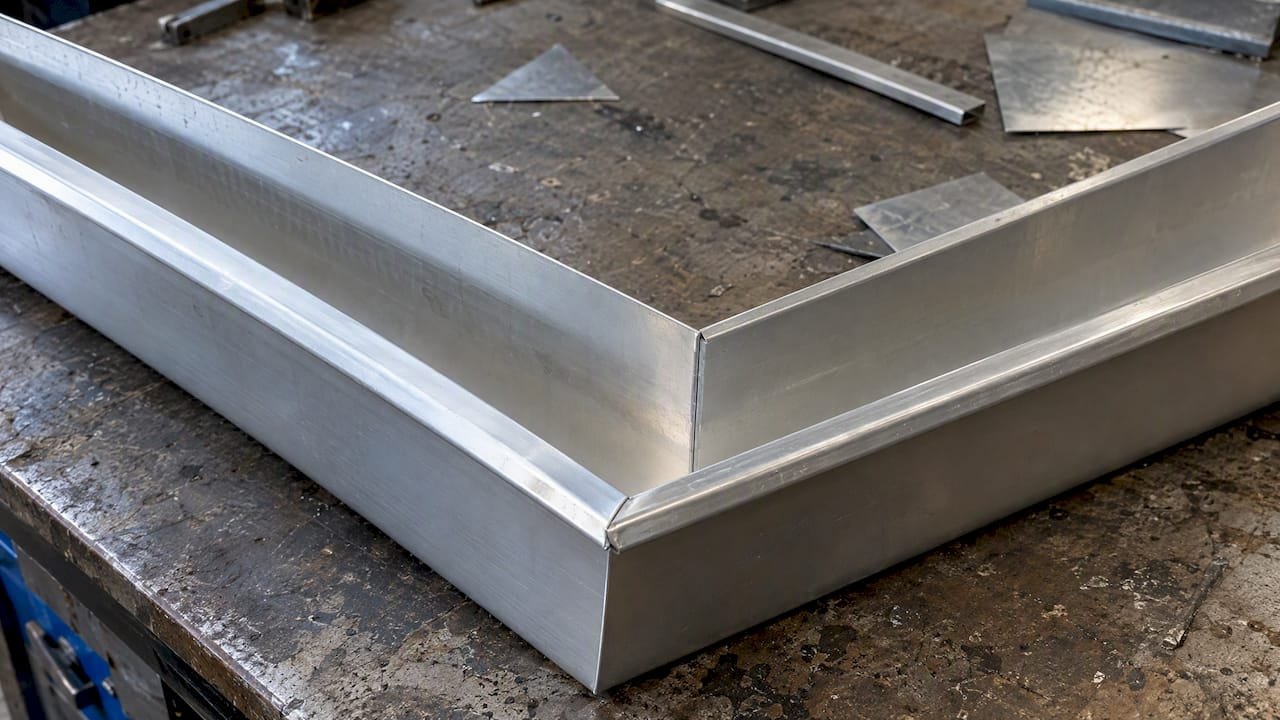
A hand or field miter is custom-cut on site by an experienced installer, often the only option when a roofline has an unusual angle or a non-standard pitch. This method takes more labor time but produces the best fit on complex homes.
Preformed corner pieces are a separate category built for sectional systems or fast repairs. They slip onto existing gutter ends and get sealed and riveted in place, which makes them useful when you are patching a single corner rather than replacing a whole run.
- Box miter: preformed or assembled joint, forgiving fit, visible seam.
- Strip miter: single continuous seam, cleaner look, requires precise cutting.
- Hand/field miter: custom-cut for odd angles, best for complex rooflines.
- Preformed corner piece: fast fix for sectional systems or spot repairs.
Materials, Sizes, and How to Match Corner Pieces to Your Gutter Profile
Before you order a corner piece or sign off on a contractor’s materials list, check that the gauge, profile, and finish all match what is already on your house. A mismatched corner will show as a seam line, a color shift, or a loose fit that leaks within a season.
Most residential seamless gutters are formed from .027 to .032 aluminum. The thicker end of that range resists dents and holds its shape better over decades, which matters most on homes with heavy tree cover or frequent storm debris.
Profile matters just as much as thickness. K-style gutters have a decorative front edge and a deeper trough, while half-round gutters are curved and shallower, so a corner piece cut for one will not fit the other. Measure both the front lip depth and the back wall height before buying parts.
Finish and coating deserve attention too, especially near the coast where salt air accelerates corrosion on cheaper hardware and fasteners. For historic homes or very long runs, some owners step up to copper or a heavier aluminum gauge for the added longevity, accepting a higher material cost in exchange for fewer repairs down the road.
- Check gauge (.027 to .032 aluminum) against your existing gutters before ordering.
- Measure lip and back wall dimensions to confirm K-style vs half-round compatibility.
- Match finish and coating, prioritizing corrosion resistance in salt-air climates.
- Consider copper or a thicker gauge for historic homes or unusually long runs.
How Installers Form and Fit Corners: Step-by-Step Overview
Watching a seamless gutter crew work a corner looks simple from the ground, but the sequence behind it is precise enough that most warranty claims trace back to a skipped step. Here is the order a competent installer typically follows.
- Measure the full run and mark where each corner, downspout, and outlet will land before cutting anything.
- Plan the slope, usually a slight drop toward the downspout, so water never pools at a corner joint.
- Roll-form the gutter on site from a coil, cutting the material to length for strip miters or pairing factory box miters where the run turns.
- Join the pieces with a consistent rivet pattern, then apply sealant along the seam and any required backing at the joint.
- Test the slope and seal with water before calling the section finished, checking for pooling or seepage right at the corner.
Seamless gutters are roll-formed on site from a coil so a whole run has no joints except at corners and outlets, which is the main reason they leak less often than sectional systems over time.
Pro Tip: A corner that sits even a quarter inch out of slope will collect standing water first, so check that spot with a level before the sealant goes on.
This is also where most DIYers hit a wall. Roll-forming machines are expensive to rent and awkward to operate alone, and precise corner work at gutter height often means extended ladder time or scaffolding. This Old House installer guidance and contractor commentary advise that seamless gutters are generally not recommended for DIY because of the equipment and slope precision involved, which is worth weighing before you commit a weekend to the project.
Common Mistakes, Troubleshooting, and Leak Prevention at Corners
Corners take more water pressure than straight runs, so they fail first when something is off. The usual culprits are insufficient slope that lets water pool instead of draining toward the downspout, and poor sealing or misplaced rivets that leave a gap for water to find.
A common practical test for corner leaks is a controlled hose test after installation and visual inspection after the first heavy rain. Run water slowly into the gutter near the corner and watch for drips underneath, then check again after a real storm, since a light hose test will not always reproduce heavy rain pressure.
Once you spot a problem, the fix depends on severity. A small seep usually calls for fresh sealant along the seam. A corner that has pulled apart or corroded through needs the piece replaced outright, and a run that keeps collecting debris at the bend may need added flashing or a guard to keep leaves from jamming the joint.
- Check for standing water right at the corner after a hose test or heavy rain.
- Inspect rivets and sealant lines for gaps, cracking, or discoloration.
- Reseal minor seeps, replace corroded or cracked corner pieces, and add flashing where debris keeps collecting.
Pro Tip: Keep a small tube of gutter sealant on hand. A five-minute touch-up at a corner in spring often prevents a full repair call by fall.
Cost Expectations and Decision Rules: When to DIY and When to Hire a Pro
Expect a range of prices per linear foot installed for seamless aluminum, varying by project specifics, a price that typically covers the gutter itself, hidden hangers, end caps, miters at every corner, outlets, sealant, removal of the old gutter, and downspouts sized to the run. Seamless systems typically cost slightly more per linear foot than sectional aluminum installed, which is a small premium for the leak reduction you get in return.
Corners themselves move the price less than you might expect, but several factors still add up: the number of corners on your home, roofline complexity, how tall the walls are, and whether the installer needs to color-match an existing system. A single-story ranch with four corners costs far less to finish than a two-story home with multiple rooflines and bump-outs.
Before you decide between DIY and hiring, run through a short checklist:
- Do you have access to a roll-forming machine, or would you need to rent one?
- Are you comfortable working at height and judging slope by eye or level?
- Is this a full gutter replacement or a single corner repair?
If you hire out, ask every bidder which corner type they plan to use, what sealant they rely on, their rivet schedule, and what warranty backs the work.
Five Star Aluminum’s Practical Tips for Corner Installs
Over many years of seamless gutter work, we have learned that coastal salt air is a significant threat to corner joints and fasteners. We inspect every corner for hidden hanger placement, finish match, and seam integrity before calling a job finished, and we stand behind our work with a guarantee. Our general advice for any homeowner: check corners twice a year, right after storm season and again before it, since that is when debris and corrosion do the most damage.
Choosing a Corner Method: Our Perspective
Strip miters earn their keep when curb appeal matters most and you are hiring a skilled installer who can cut them tight. Box miters make more sense for budget jobs, rentals, or single-corner patches where a visible seam is a fair trade for lower cost and faster work.
— Brian
Request a Professional Seamless Gutter Installation
Choosing the right corner method matters less than having it installed correctly, and that is where we come in. We handle gutter installation, gutter repair, gutter guard installation, and downspout placement so every corner on your home gets a proper slope, seal, and fit.

When you request an estimate, we check your roofline on site, write up a clear bid, and explain the warranty before any work starts.
| What you get | Detail |
|---|---|
| On-site evaluation | We check slope, corners, and existing damage in person |
| Written bid | Clear pricing before any work begins |
| Workmanship backing | Guarantee on qualifying installs |
Ready to get your corners done right? Request a quote through our services page and we will take it from there.
FAQ
Do seamless gutters go around corners?
Yes, seamless gutters go around corners using miter joints or preformed corner pieces rather than factory seams. Seamless gutters are roll-formed on-site into continuous runs with joints only at corners and outlets, which is why they leak less than sectional systems overall.
How do you do corners on gutters?
Installers measure the run, plan the slope toward the downspout, then either cut a strip miter for a clean single seam or use a box miter for a more forgiving fit. The joint gets riveted in a consistent pattern and sealed before the installer tests it with water.
What is a 90-degree gutter corner?
A right-angle gutter corner is simply the standard turn found where two walls of a house meet, formed with a box miter, strip miter, or hand-cut field miter depending on the installer’s method and the roofline. The angle itself does not change the technique, though a non-standard angle often requires a hand miter instead.
How much should 100 feet of seamless gutters cost?
Expect a range of prices per linear foot installed for seamless aluminum, varying by project specifics. Final pricing depends on the number of corners, roof height, and whether old gutters need to be removed first.
Sources
Key Sources for Installation and Cost Figures
The cost ranges, installation steps, and corner comparisons in this guide draw on a gutter replacement cost guide and an established home-improvement publisher’s seamless gutter coverage, both cited where their figures appear in the article above.