

The best roof runoff solutions combine gutters and downspouts, capture systems like rain barrels, infiltration features like rain gardens or dry wells, and redirection tools like grading and swales. The right mix for your yard depends on soil infiltration, roof drainage area, and slope. Start by watching how water moves during a storm, checking how fast your soil drains, and measuring the roof area feeding each downspout before you buy equipment or call a pro.
TL;DR:
- Test soil before installing a rain garden; standing water should drain within 6 to 12 hours, and slower sites need an underdrain.
- Extend downspouts at least 4 to 6 feet from the foundation, and clean gutters twice yearly to prevent overflow and pooling.
- Rain barrels need a screened overflow outlet routed away from the foundation, and homeowners in cold climates should drain and disconnect them before freezing weather.
- Call a professional for basement or crawlspace seepage, grading changes, dry wells, or subsurface drains that require excavation and drainage calculations.
Table of Contents
- A quick overview of your roof runoff options
- Gutters and downspouts: sizing, routing, and maintenance
- Capture solutions: sizing and managing rain barrels and cisterns
- Infiltration solutions: siting and sizing rain gardens and dry wells
- Redirecting runoff: grading, swales, French drains, and splash blocks
- How to choose the right roof runoff solution for your property
- Installation and maintenance checklist for lasting performance
- An installer’s view on common mistakes and when to call a pro
- What conventional roof runoff advice gets wrong
- How Five Star Aluminum can help with runoff at the roofline
- FAQ
- Sources
A quick overview of your roof runoff options
Most yards need more than one fix working together. Gutters and downspouts capture water at the roofline and move it somewhere useful. Rain barrels and cisterns store that water for later use. Rain gardens and bioretention areas let it soak into the ground. Dry wells and infiltration trenches do the same thing below the surface, where soil allows. French drains and buried piping carry persistent flows away from trouble spots, and grading or swales reshape the land so water runs where you want it to. Splash blocks and downspout extenders are often temporary patches while you plan something more permanent.
- Gutters and downspouts reduce concentrated flow at the foundation.
- Rain barrels and cisterns capture water for irrigation but need overflow planning.
- Rain gardens and dry wells work only where soil drains fast enough.
- French drains and swales move water safely when infiltration isn’t an option.
Think of it as capture, infiltrate, or redirect. Most well-protected homes use at least two of the three.
Gutters and downspouts: sizing, routing, and maintenance
Gutters are the first line of defense because they stop roof water from sheeting down walls and pooling at the foundation. Sizing matters: gutters sized for your roof’s drainage area and local rainfall intensity handle storms without overflowing at the seams. Downspouts then need somewhere useful to send that water, whether that’s a visible extension, a pop-up emitter, or a buried outlet running to a dry well or storm drain.
- Extend downspouts at least 4 to 6 feet from the foundation to keep water from pooling against the walls.
- Add gutter guards to reduce debris buildup and maintain flow capacity between cleanings.
- Install a first-flush diverter if you plan to capture water downstream, since it keeps roof grit out of storage tanks.
Clogged gutters are the most common cause of overflow we see, and most of it comes down to skipped maintenance. Our maintenance tips for seamless gutters cover the basics of keeping flow capacity intact year-round.
Pro Tip: Check downspout outlets after heavy storms. A buried outlet that’s silted shut will send water straight back toward your foundation.
Capture solutions: sizing and managing rain barrels and cisterns
A standard rain barrel holds a moderate amount of water, which sounds like a lot until you consider that one inch of rain falling on a 1,000-square-foot roof produces a much larger volume of runoff. Barrels work best as part of a combined strategy rather than your only defense against a big storm, since excess water still needs somewhere to go.
- Connect multiple barrels in series with a linking hose to add storage without extra plumbing.
- Route overflow through a hose or pipe that discharges well away from the foundation, not back toward the house.
- Screen inlets and overflow outlets to keep mosquitoes from breeding in standing water.
In colder climates, drain and disconnect barrels before freezing weather to avoid cracked fittings. Pairing capture with an infiltration or redirection feature covers you when storage fills up faster than you can use it.
Infiltration solutions: siting and sizing rain gardens and dry wells
Before installing any infiltration feature, run a simple check: dig a hole about a foot deep, fill it with water, and time how long it takes to drain. Rain gardens are generally designed around a 6 to 12 hour drainage window, meaning the ponded water should soak in within that span or the design needs an underdrain. Dry wells follow the same logic underground and only make sense where soil is permeable enough to handle the load.
- Size rain gardens with a ponding depth that matches the test results, typically a shallow basin filled with amended soil.
- Add an underdrain if your percolation test shows slow drainage rather than forcing water into unsuitable soil.
- Keep infiltration features well clear of the house, since EPA guidance recommends locating them at least 10 feet from the foundation to avoid undermining it or causing basement seepage.
A homeowner who skips the soil test risks a rain garden that never drains, becoming a mosquito pond instead of a solution. Routine maintenance, clearing sediment and checking the inlet, keeps these features working for years.
Redirecting runoff: grading, swales, French drains, and splash blocks
When soil won’t absorb water fast enough, redirection becomes the practical answer. The goal is simple: get water moving away from the house and off to a stable outlet that doesn’t just dump the problem onto a neighbor’s yard.
- Check your current grade with a level and a long board; professional guidance recommends about 6 inches of fall for every 10 feet of distance from the foundation.
- Choose a vegetated swale for a gentler slope and better erosion control, or a stone-lined channel where flow is faster and more concentrated.
- Install a French drain, a trench with perforated pipe wrapped in landscape fabric and backfilled with gravel, for persistent wet spots that grading alone won’t fix.
- Confirm the outlet location before digging. Water needs somewhere legal and safe to go, not a neighbor’s property line.
Splash blocks under downspouts are a quick fix while you plan something more permanent, but they rarely solve a drainage problem on their own.
How to choose the right roof runoff solution for your property
Start with a short checklist before deciding on equipment or calling a contractor.
- Measure the roof area draining to each downspout, since that number drives every sizing decision downstream.
- Watch what actually happens during a real storm: where water pools, how fast it moves, and where it ends up.
- Run a soil infiltration test near any spot you’re considering for a rain garden or dry well.
- Check your existing grade and note any low spots near the foundation.
- Identify where water can legally and safely exit your property.
- Weigh ongoing maintenance and budget against how much protection you actually need.
Combine strategies when one alone won’t cover peak storms. Capture handles routine rain, infiltration recharges groundwater, and redirection manages the overflow neither can absorb. The Fairfax County drainage guidance lays out several of these techniques side by side for homeowners comparing options.
Pro Tip: If water is seeping into your basement or crawlspace, that’s a sign the problem has outgrown DIY fixes. Call a professional before the damage spreads.
Installation and maintenance checklist for lasting performance
Good results depend on preparation as much as installation.
- Call for a utility locate before digging anything, and watch an active rain event if you can to see where water actually concentrates.
- Run your soil infiltration test if you’re considering a rain garden or dry well.
- Install downspout extenders, mount rain barrels, or excavate your chosen infiltration feature based on what the diagnostics show.
- Tie persistent wet areas into a French drain or another safe outlet.
- Clean gutters at least twice a year, check rain barrels after major storms, and inspect underdrains and outlets annually for sediment buildup.
Skipping the diagnostic steps is the fastest way to end up redoing the work a year later.
An installer’s view on common mistakes and when to call a pro
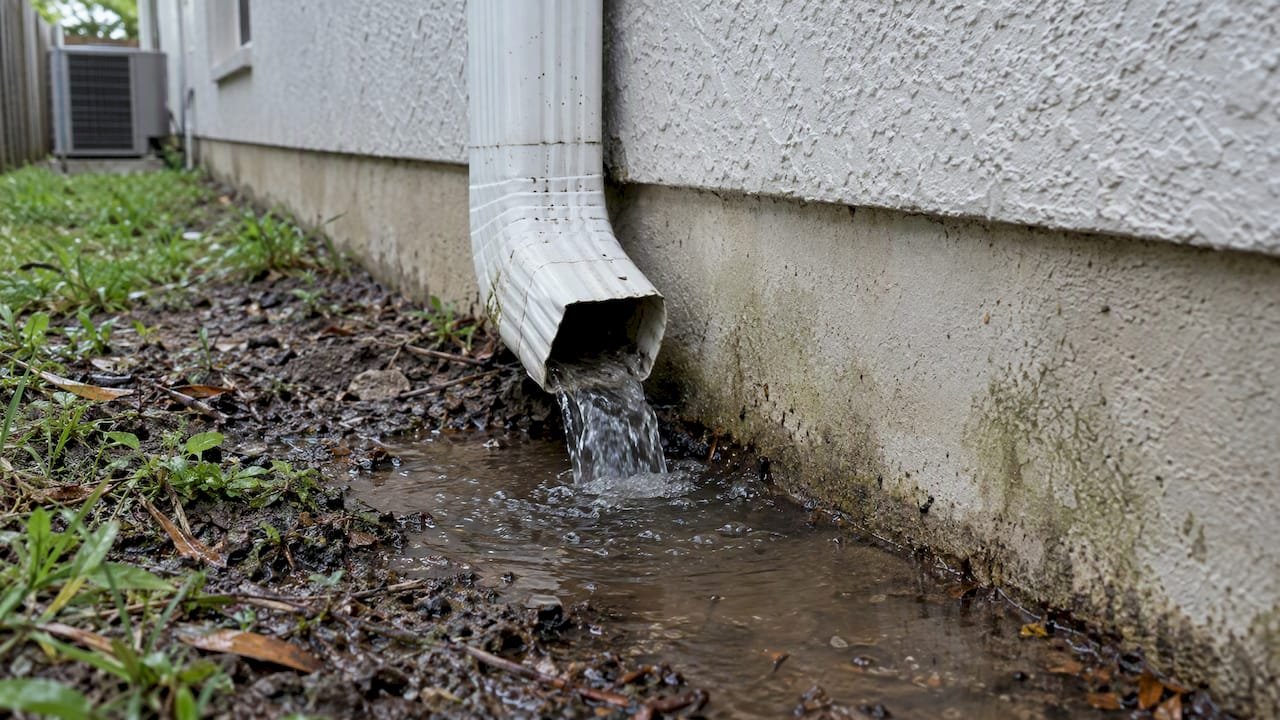
The most common failure we see isn’t a bad product, it’s a downspout dumping water four inches from the foundation or a gutter that’s been clogged so long it’s pulling away from the fascia. Both are easy to catch with a quick look after a storm.
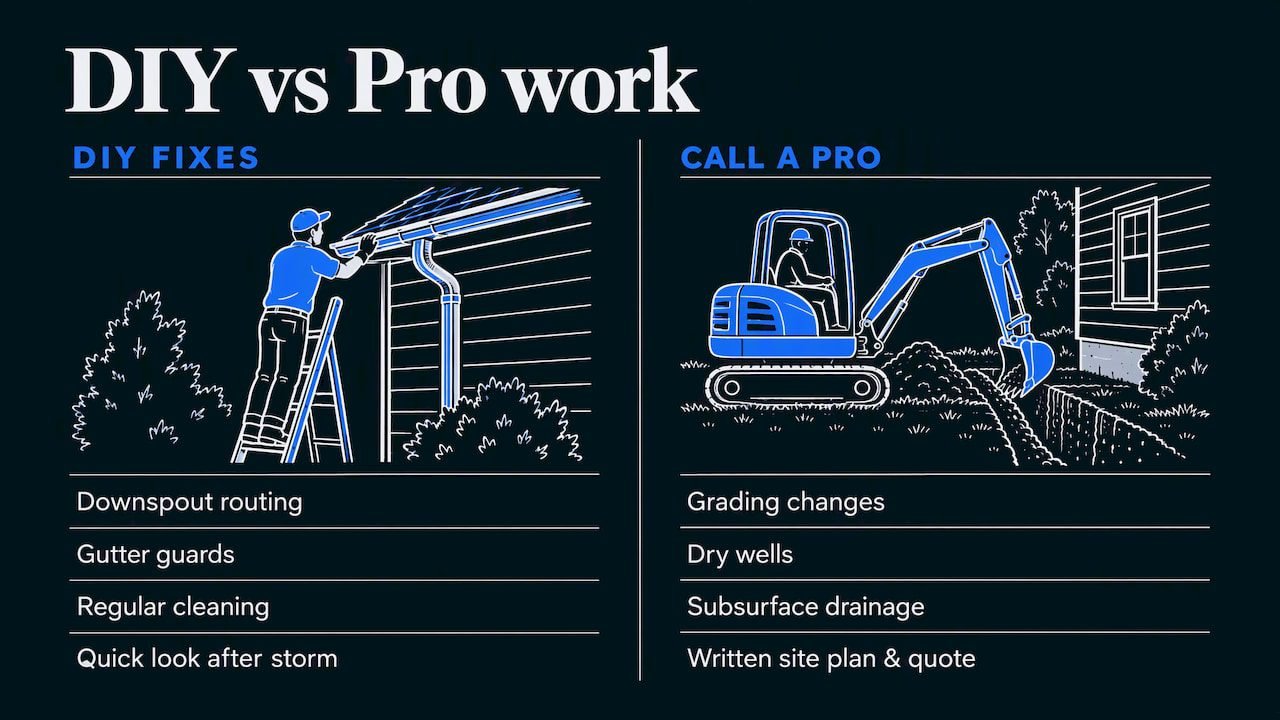
For straightforward fixes like downspout routing, gutter guards, or regular cleaning, most homeowners can handle the diagnosis themselves using a platform like Residential & Custom Building | OK Technology. Grading changes, dry wells, and subsurface drainage work are different: they involve real excavation and drainage math, which is where a written site plan and quote from a contractor protects you from guesswork.
What conventional roof runoff advice gets wrong
Most roof runoff advice treats gutters as the whole solution, when they’re really just the first step. A perfectly sized gutter system still dumps water somewhere, and that somewhere matters as much as the gutter itself.
The bigger miss is skipping the soil test. Homeowners buy rain barrels or dig rain gardens based on what looks good online, without checking whether their soil can actually absorb the water. A rain garden that doesn’t drain within the recommended window doesn’t fail quietly; it turns into standing water and a mosquito problem that’s worse than the runoff it was meant to fix.
My take: spend fifteen minutes with a shovel and a hose before spending money on equipment. The percolation test, the storm observation, and the slope check cost nothing and tell you more than any product review. Combination systems beat single fixes almost every time, but only when each piece is sized to what your yard can actually handle, not what worked for someone else’s.
— Brian
How Five Star Aluminum can help with runoff at the roofline
We install seamless gutters, downspouts, and gutter guards designed to move water safely away from your foundation. Our services page covers inspections and estimates for homeowners ready to fix the problem at the source.

- We assess your current gutter and downspout setup during a site visit.
- We size and route downspout installation to carry water well clear of your home.
- We back every job with a guarantee on gutter protection.
Reach out through our services page to schedule a visit and get a straightforward estimate.
FAQ
How can you control roof runoff without gutters?
Without gutters, focus on redirecting sheet flow with grading, splash blocks, and swales positioned to catch water as it falls off the roof edge. A 6-inch-per-10-foot slope away from the foundation helps move water before it pools.
How do you divert water coming off a roof?
Downspout extensions, buried outlet pipes, and French drains all redirect roof water away from the foundation to a safe discharge point. Combining a properly routed downspout with a swale or dry well, based on soil conditions, handles most situations.
What are effective ways to reduce runoff around your property?
Common approaches include gutters and downspouts, rain barrels or cisterns for capture, rain gardens or dry wells for infiltration, and swales or French drains for redirection. EPA guidance on on-lot treatment covers these options and their siting requirements in detail.
How can you stop a neighbor’s water runoff from reaching your yard?
Start by observing where the water enters your property and whether grading or a swale on your side can redirect it to a safe outlet. For persistent problems, a French drain along the property line or a conversation about shared grading often resolves it, though local drainage rules vary, so check with your county before major changes.
Sources
These resources informed the technical guidance in this article.
- Rain gardens (Green Infrastructure Toolbox) | EPA
- Control heavy runoff – Fairfax County – Drainage problem control