

Dark spots on your soffit are most often mold or mildew feeding on trapped moisture, not just surface dirt. Your first move should be tracking down the moisture source, whether that’s a clogged gutter, a ventilation gap, or a roof leak, before or while you clean. Small, isolated spots are usually safe to handle yourself; larger areas or soft, damaged panels call for a professional look.
TL;DR:
- The EPA considers areas under about 10 square feet manageable for homeowners; larger or hidden damage, or an unclear moisture source, warrants professional assessment.
- People with asthma, COPD, immune suppression, or mold sensitivity should avoid cleanup; others need an N95 mask, sealed goggles, gloves, and ladder support.
- Use detergent and water first; reserve bleach for stubborn stains, never mixing it with other cleaners and using no more than 1 cup per gallon.
- Have a professional assess soft or sagging panels, mold that returns within weeks, or stains reaching the fascia or roof edge.
- Clear gutters, keep soffit vents and baffles open, and dry cleaned panels within 24 to 48 hours to reduce moisture that fuels regrowth.
Table of Contents
- 1. What causes mold to grow on soffits?
- 2. How do you safely clean mold off a soffit?
- 3. Should you repair or replace a moldy soffit?
- 4. How can you keep soffit mold from coming back?
- 5. A homeowner’s quick soffit inspection checklist
- Prioritizing the moisture fix over the mold stain
- How we help when soffit mold keeps coming back
- FAQ
- Sources
1. What causes mold to grow on soffits?
Soffit mold almost always traces back to water that lingers longer than it should. Once you spot the stain, the real work is figuring out which moisture pathway fed it.
- Gutter overflow or clogged downspouts push water back under the eaves instead of away from your home, soaking the soffit from below.
- Exhaust fans vented into the attic, or ducts that have come loose, dump warm, moist air right where it condenses against cool soffit panels.
- Roof edge flashing failures or small leaks near the eaves let water travel along rafters and show up as staining well away from the actual leak.
- Blocked soffit vents or missing baffles trap humid attic air against the underside of the roof deck, and that moisture migrates outward.
- Mulch, soil, or thick vegetation splashing against low eaves keeps organic matter and moisture in constant contact with the surface, feeding fungal growth even without a structural problem.
High indoor humidity compounds all of these causes, since attic air often carries whatever moisture your living space generates if ventilation can’t clear it fast enough.
2. How do you safely clean mold off a soffit?
EPA guidance treats this as a moisture problem first and a cleaning job second: mold you scrub away will likely return unless the underlying dampness gets fixed. The agency generally considers areas under about 10 square feet manageable for a homeowner to clean, while larger or hidden damage usually needs a professional.
Before you start, know who should skip this task. The CDC advises that people with asthma, COPD, a weakened immune system, or significant mold sensitivity avoid cleanup entirely and consider hiring a qualified contractor instead.
If you’re cleared to proceed, gather your protective gear first:
- A NIOSH-approved N95 respirator
- Sealed safety goggles (not standard glasses)
- Non-latex gloves
- A stable, properly footed ladder with a helper nearby
Follow these steps once you’re set up:
- Test a small, hidden patch with your cleaning solution to check for discoloration or damage.
- Wet-scrub or damp-wipe the mold using detergent and water, which handles most hard surfaces without harsh chemicals.
- If staining persists, use a bleach solution the CDC caps at no more than 1 cup per gallon of water, and never mix it with ammonia or other cleaners.
- Rinse the area if you used bleach or heavy detergent.
- Dry the soffit thoroughly, ideally within 24 to 48 hours, since that window matters more for preventing regrowth than the product you used.
Work wet rather than dry to keep spores from scattering, cover nearby plants from runoff, and keep the area ventilated while you work.
Pro Tip: Detergent and water handle most hard-surface soffit mold on their own. Save bleach for stains that don’t lift, since it adds fumes and corrosion risk without much extra cleaning power.
3. Should you repair or replace a moldy soffit?
Cleaning solves surface mold, but some soffits have taken on damage that cleaning can’t fix. The material itself tells you a lot: hard, intact aluminum or vinyl panels usually wipe clean and stay structurally sound, while porous or swollen wood-based panels often can’t be fully restored. The EPA notes that porous, moisture-damaged materials may need to come out entirely, since mold can work into the material itself.
Size matters too. The EPA’s rough small-area guideline of under 10 square feet is a useful DIY cutoff; anything larger, or any area where you can’t confirm the moisture source, is worth a professional assessment.
Watch for these signs that point to deeper damage:
- Soft or spongy spots when you press on the soffit panel
- Visible sagging or separation from the fascia
- Mold that returns within weeks of a thorough cleaning
- Water stains that extend into the fascia or roof edge
A professional inspection typically checks the attic for blocked vent baffles, examines flashing and gutter condition, and traces staining back to its source rather than treating the visible spot alone. If you’re weighing costs, our breakdown of soffit and fascia replacement pricing walks through what drives the decision between repair and full replacement.
4. How can you keep soffit mold from coming back?
Stopping recurrence means addressing the moisture pathway you identified, not just the stain. Start with your gutters and downspouts, since overflow and splash-back are among the most common culprits.
- Clear gutters and downspouts regularly and check for overflow points that splash the soffit below.
- Confirm soffit vents are physically open and that insulation hasn’t buried the baffles that keep each rafter bay’s air gap intact.
- Understand the airflow concept at work: low intake at the soffit paired with higher exhaust near the ridge is what moves humid attic air out rather than trapping it against the roof deck.
- Where soffit vents aren’t practical, low gable vents or eyebrow vents are accepted alternatives, with vent sizing guided by your local building code.
- Trim vegetation back from the eaves, inspect bathroom and dryer fan ducts for secure attic connections, and check for any duct that vents into the attic instead of outside.
Pro Tip: An attic exhaust fan installed without clear, unblocked soffit intake can make eave moisture worse, not better. Airflow only works as a complete system.
Our soffit vs. fascia checklist walks through a seasonal routine for catching these issues before they turn into stains.
5. A homeowner’s quick soffit inspection checklist
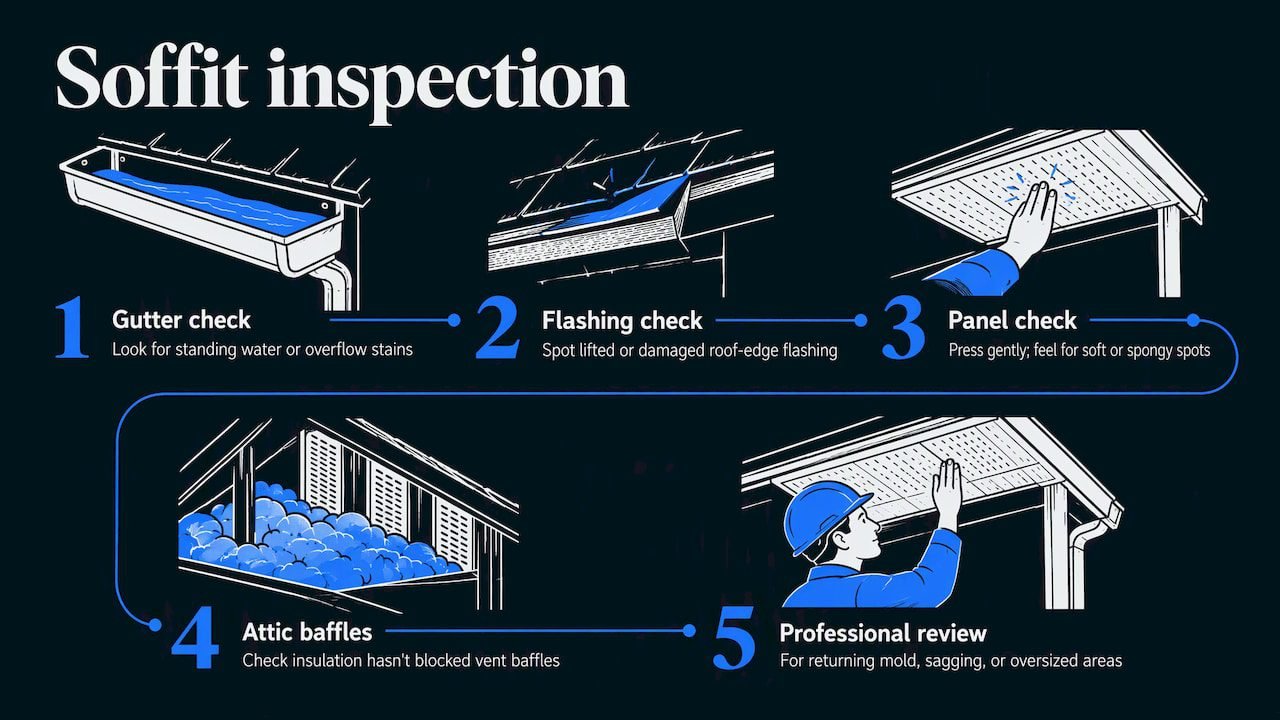
A short walkaround catches most early warning signs. Check your gutters for standing water or visible overflow stains, look along the roof edge for lifted or damaged flashing, and press gently on soffit panels to feel for soft or spongy spots. If your attic is accessible, glance at the vent baffles to confirm insulation hasn’t blocked them.
Schedule a professional inspection when mold returns after cleaning, when you find soft or sagging panels, or when the affected area is too large to confidently handle yourself. Experience with soffit, fascia, and gutter systems suited to Florida’s climate guides thorough inspections focused on finding the moisture source first.
Prioritizing the moisture fix over the mold stain
Most homeowners reach for bleach first and the moisture source last, which is backward. Mold on a soffit is a symptom, and treating the symptom while ignoring a clogged downspout or a blocked vent baffle just buys you a repeat cleaning job next season. The homeowners who get ahead of this check their gutters and attic ventilation on a schedule, not just when a stain appears. Clean safely, yes, but spend most of your attention on the moisture itself.
— Brian
How we help when soffit mold keeps coming back
When cleaning doesn’t hold, the cause is usually something we can fix directly: a gutter dumping water where it shouldn’t, a vent baffle buried in insulation, or a soffit panel that’s absorbed too much moisture to clean. We handle soffit and fascia repair across Sarasota and nearby counties, built around salt-air-resistant materials suited to Florida’s climate, and we back our gutter work with a Lifetime No-Clog Guarantee.

If a soffit inspection turns up water damage tied to your roof or significant structural compromise, a mold remediation and restoration specialist like Ready 2 Inspect can handle assessment, water damage repair, and insurance claims for the parts of the job that fall outside gutters and exterior trim. For the gutters, soffit, and fascia work itself, reach out and we’ll walk your eaves with you, check the likely moisture paths, and tell you straight whether you’re looking at a repair or a full replacement.
FAQ
How can I remove mold from my roof?
Roof mold typically needs a different approach than soffit mold since you’re working on a sloped, often fragile surface; a detergent-and-water scrub works for small, accessible areas, but EPA guidance generally points larger or hard-to-reach roof areas toward a professional. Avoid pressure washing roof shingles, since it can strip granules and shorten shingle life.
How do I know if a soffit needs replacing?
If the panel feels soft, spongy, or sags when you press on it, or if mold keeps returning after a proper cleaning, the material has likely absorbed too much moisture to fully recover. The EPA notes that porous, damaged materials often can’t be restored to their original condition and may need removal rather than cleaning.
What is the safest and most effective way to clean gutters and fascias?
Clear debris by hand or with a scoop, flush downspouts with a hose to confirm free flow, and wipe fascia boards with detergent and water rather than harsh chemicals. Always work from a stable ladder with a helper present, and check our seasonal gutter checklist for timing guidance through the year.
Do soffit vents let bugs in?
Properly installed soffit vents include a screen or mesh designed to block insects while still allowing airflow, so functioning vents shouldn’t create a bug entry point. A damaged screen or a gap around the vent frame is more often the culprit, and it’s worth checking during any soffit inspection.
Sources
- Mold Cleanup in Your Home | US EPA
- Mold Clean Up Guidelines and Recommendations | CDC
- Baffles | Building Science Education
- Measure Guideline: Guide to Attic Air Sealing