

Aluminum is the better long-term choice for most homeowners, offering more strength and a longer lifespan, while vinyl remains a reasonable pick when upfront cost or a short ownership window matters more than durability. We install seamless aluminum systems and work with vinyl where it fits, so this comparison walks through the tradeoffs before you decide.
TL;DR:
- Vinyl costs $3 to $7 per linear foot and lasts 10 to 20 years; aluminum costs $7 to $12 and lasts 20 years or more.
- Choose vinyl for a rental, mild climate, or planned sale within a few years; coastal, storm prone, and tree lined properties favor aluminum.
- Seamless aluminum is fabricated to each roofline on site, removing joints where vinyl sections often leak, but installation requires professional equipment.
- Both materials need debris cleared twice yearly; inspect hangers and joints for movement, and repair worn vinyl seams before leaks develop.
Table of Contents
- Cost, Lifespan, and Weather: Side-by-Side Tradeoffs
- Why PVC and Aluminum Behave So Differently on a Roofline
- Matching the Material to Your Climate and Home
- What Vinyl and Aluminum Actually Cost Over 20 Years
- Installing and Maintaining Each Material the Right Way
- Why We Recommend Seamless Aluminum for the Long Haul
- A Simple Rule for Choosing Between the Two
- Let Us Handle Your Gutter Installation the Right Way
- FAQ
- Sources
Cost, Lifespan, and Weather: Side-by-Side Tradeoffs
The right material depends on how you weigh five factors: price, lifespan, weather resistance, looks, and upkeep. Vinyl wins on initial price. Aluminum wins almost everywhere else, which is why it tends to be the better value once you look past the first invoice.
Here is how the two compare on the factors homeowners ask about most:
- Upfront cost: Vinyl typically runs $3 to $7 per linear foot installed, while aluminum typically runs $7 to $12 per linear foot installed, with seamless fabrication and larger profiles pushing aluminum toward the higher end.
- Lifespan: Vinyl generally lasts 10 to 20 years, while aluminum often lasts 20 years or more depending on finish and climate.
- Weather resistance: Vinyl tends to stiffen and crack in freezing temperatures and can warp under intense heat or sustained UV exposure, while aluminum holds its shape across a wider temperature range and shrugs off UV damage.
- Aesthetics: Seamless aluminum is fabricated on-site to match your roofline with no visible joints, while vinyl is typically sold in sections that connect at seams.
- Maintenance: Sectional vinyl seams are more prone to separating and leaking over time, while seamless aluminum has far fewer failure points to monitor.
Neither material is maintenance-free. Vinyl sections can loosen at the joints and need periodic resealing, while aluminum can dent from ladder contact or falling branches. The difference is in degree: a dent is cosmetic and rarely causes a leak, while a failed seam almost always does.
Why PVC and Aluminum Behave So Differently on a Roofline
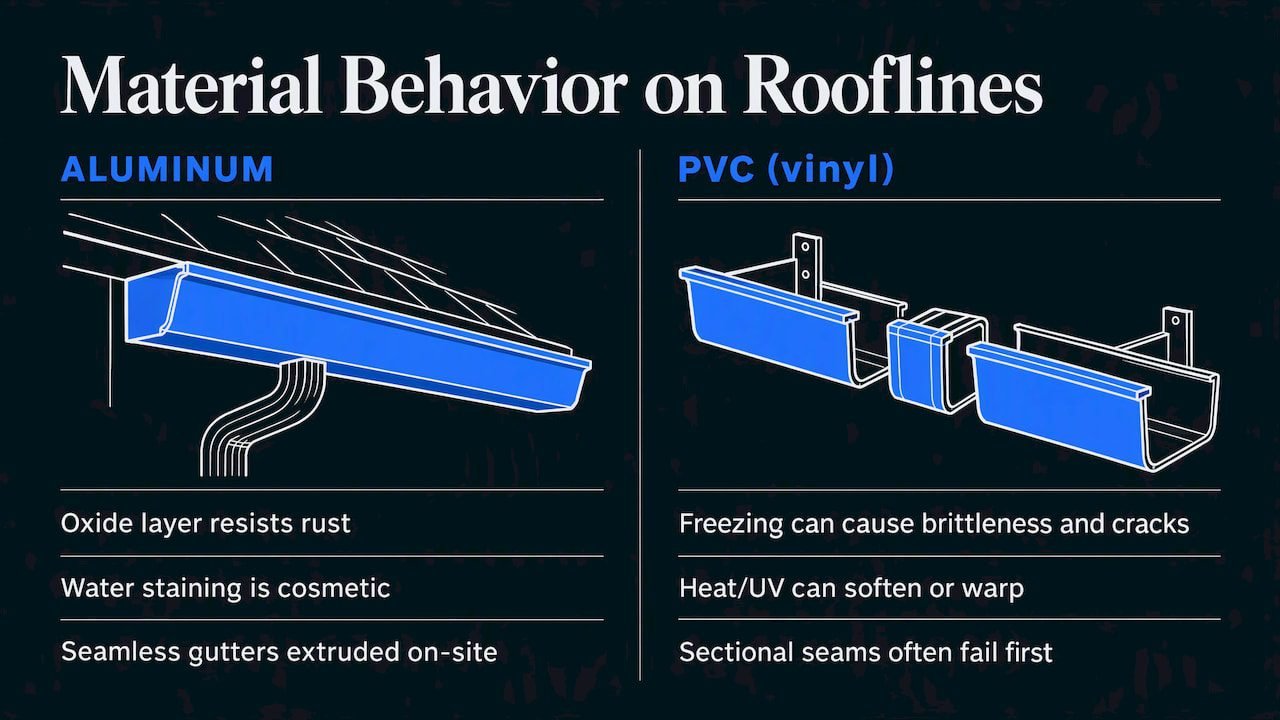
The core tradeoff comes down to chemistry and manufacturing, not just price tags. Aluminum forms a thin, protective oxide layer that resists rust, though it can develop cosmetic water staining if panels are stored or handled improperly before installation. That staining is a cosmetic storage issue, not a sign of structural failure.
PVC, the plastic used in vinyl gutters, responds to temperature swings in the opposite way. It becomes brittle and prone to cracking in freezing weather, and it can soften or warp under prolonged heat and UV exposure, which is why vinyl systems in sunbelt climates sometimes show sagging after a few summers.
Manufacturing method matters just as much as the raw material. Seamless aluminum gutters are extruded to the exact length of your roofline on-site, eliminating the joints where sectional vinyl systems typically fail first. On the environmental side, aluminum used in rainware is a stable, widely recycled material, which supports a longer useful life and an easier path to recycling at the end of that life.
Matching the Material to Your Climate and Home
Climate and how long you plan to stay in your home should drive this decision more than preference alone. Coastal properties, storm-prone regions, and anyone planning to stay put for a decade or more generally do better with aluminum, since it resists the salt-air corrosion and wind-driven impact that wear down lesser materials. Vinyl suits mild climates, tighter budgets, or a shorter ownership horizon, such as a rental property or a home you plan to sell within a few years.
A few practical scenarios illustrate the split:
- A rental home with a quick turnover timeline rarely needs the 20-year lifespan of aluminum, making vinyl’s lower upfront cost reasonable.
- A coastal cottage exposed to salt air benefits from aluminum’s corrosion resistance, where vinyl’s seams are more likely to loosen under constant moisture.
- A rural, tree-lined lot with regular limb drop favors aluminum’s dent resistance over vinyl’s tendency to crack on impact.
What Vinyl and Aluminum Actually Cost Over 20 Years
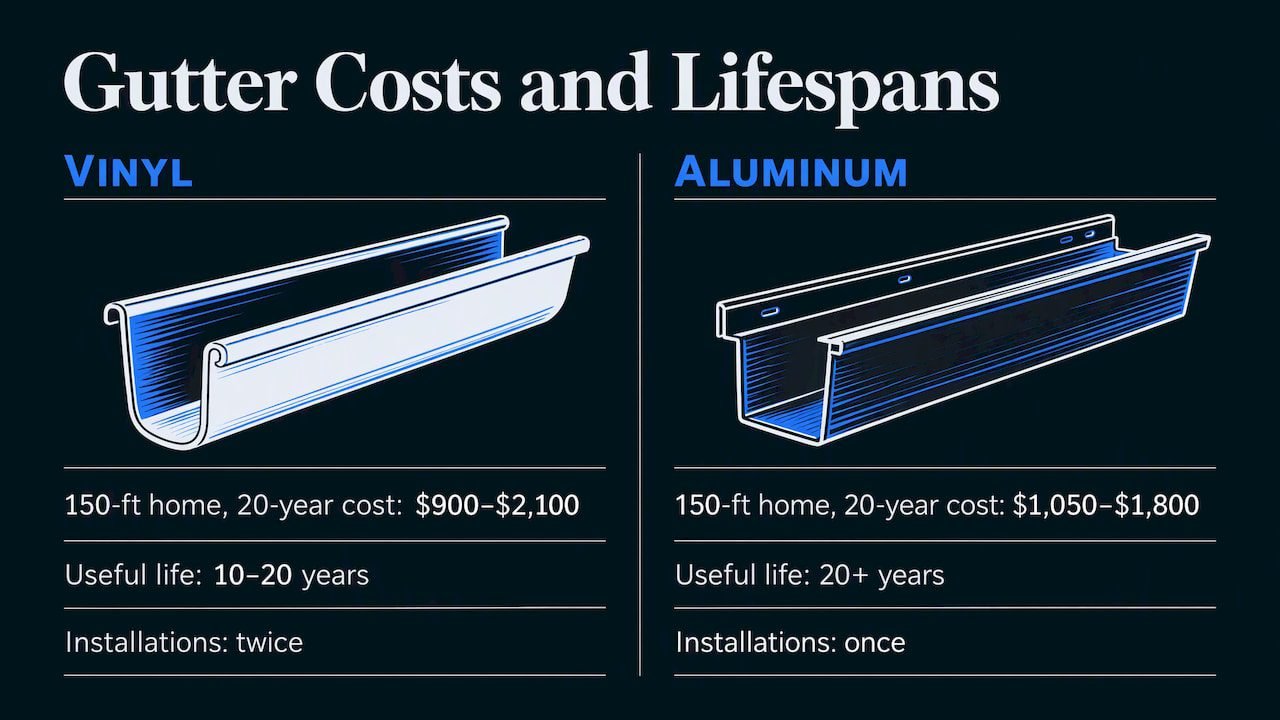
Looking only at the sticker price misses the bigger picture. Say a home needs 150 linear feet of gutter. At $3 to $7 per foot, vinyl runs roughly $450 to $1,050 installed, while aluminum at $7 to $12 per foot runs roughly $1,050 to $1,800.
Vinyl’s useful life of 10 to 20 years means a homeowner staying put for two decades may pay for the installation twice, roughly $900 to $2,100 total, before factoring in any seam repairs along the way. Aluminum’s 20-plus year lifespan often covers that same stretch with a single installation. Factors that push aluminum costs higher, like premium finishes, oversized profiles, or fascia repair alongside the gutter work, still tend to land below the cost of replacing vinyl twice. Over a full ownership cycle, aluminum frequently comes out ahead on total cost, not just durability.
Installing and Maintaining Each Material the Right Way
Vinyl’s lighter weight and sectional design make it more approachable for a confident DIYer, since damaged pieces snap out and replace individually. Seamless aluminum, by contrast, is fabricated with a portable extrusion machine on-site and is best left to a professional crew with the right tools and experience.
Whichever material you choose, avoid these common installation mistakes:
- Incorrect slope: Gutters need a slight pitch toward the downspout, or water pools and adds weight.
- Too few hangers: Spacing hangers too far apart lets the gutter sag under heavy rain or debris.
- Poor fastener choice: Fasteners that react with the gutter material accelerate corrosion or loosen over time.
- Downspout misplacement: Building-science guidance recommends routing discharge well away from the foundation rather than letting water pool at the base of the home.
A simple seasonal cleaning and inspection routine goes a long way: clear debris twice a year, check hangers and joints for movement, and reseal or replace sections showing wear before they fail. For a fuller walkthrough, our maintenance guide for seamless gutters covers the details.
Pro Tip: When you call a professional for a quote, ask specifically about seamless fabrication, salt-air-resistant finishes, and what warranty backs the installation.
Why We Recommend Seamless Aluminum for the Long Haul
With over 20 years of experience installing gutters across Florida’s coastal and storm-prone neighborhoods, we have seen firsthand which systems hold up and which ones fail at the seams, often literally. Our seamless aluminum installations eliminate the joints that cause most sectional gutter leaks, and we back every job with a guarantee and use salt-air-resistant materials built for similar conditions.
Professional seamless installation is particularly worth considering for coastal homes, properties with mature trees nearby, and anyone planning to stay in their home long enough for a 20-year lifespan to matter.
A Simple Rule for Choosing Between the Two
Here is the rule of thumb: choose aluminum when you want longevity and the best long-term value, and choose vinyl when the lowest upfront cost or a short ownership window matters more. Weigh your climate, how long you plan to stay, and how much maintenance you are willing to do before committing either way.
— Brian
Let Us Handle Your Gutter Installation the Right Way
Choosing the right material is only half the decision. Getting it installed correctly is what actually protects your home, and that is where our team comes in. We offer:
- Seamless gutter installation custom-fitted to your roofline
- Gutter replacement, built to outlast standard sectional systems
- Gutter guard installation to reduce debris buildup
- Downspout installation routed to keep water away from your foundation
- Gutter repair and cleaning for existing systems showing wear

Every seamless aluminum system we install comes with a no-clog guarantee and salt-air-resistant materials designed for coastal climates. If you are ready to stop guessing and get a system built to last, request a free estimate and we will walk the property with you before you decide anything.
FAQ
What are the disadvantages of aluminum gutters?
Aluminum gutters cost more upfront than vinyl and can dent from ladder contact, hail, or falling branches. They can also develop cosmetic water staining if improperly stored before installation, though this does not affect structural performance.
What are the disadvantages of vinyl gutters?
Vinyl gutters become brittle and prone to cracking in freezing temperatures and can warp or sag under intense heat and prolonged UV exposure. Their sectional design also means more seams, which are common points for leaks to develop over time.
Which is better, aluminum or vinyl gutters?
Aluminum is generally the better choice for long-term value, typically lasting 20 years or more compared to vinyl’s 10 to 20 years. Vinyl remains a reasonable option when minimizing upfront cost matters more than longevity.
How much more expensive is aluminum than vinyl?
Vinyl typically installs for $3 to $7 per linear foot, while aluminum typically installs for $7 to $12 per linear foot. The gap narrows when you account for aluminum’s longer lifespan and fewer repairs over time.
Are seamless aluminum gutters worth the extra cost?
Seamless aluminum eliminates the joints where most sectional gutter leaks start, which reduces maintenance and extends service life. For coastal or storm-prone homes, the reduced leak risk and corrosion resistance often justify the higher installed cost.
Sources
- Water staining on aluminum: guidelines (Aluminum Association)
- Foundation drain, gutters, downspouts (Building Science Education / DOE)
- Vinyl vs. Aluminum Gutters: Pros, Cons, and Costs | Angi