

For most homes, seamless aluminum gutters are the better choice. They cost a fraction of copper, come in baked-on colors, install quickly and hold up well when they are properly pitched, sealed and kept clear. Copper earns its place on historic, architect-designed or high-end homes where the owner wants a metal that ages into a green patina and plans to stay for decades. Below is how the two compare on cost, lifespan, weather, upkeep and appearance, so you can decide with real numbers.
TL;DR
- Cost: reported installed prices run roughly $6 to $12 per linear foot for seamless aluminum and $15 to $40 for copper, so copper often costs about three to four times as much.
- Lifespan: aluminum typically lasts 20 to 30 years with upkeep. Copper is reported to last 50 years or more.
- Florida weather: salt air, heavy rain and humidity are hard on any metal. A durable, salt-air-resistant aluminum system with a quality finish is the practical answer for most Sarasota-area homes.
- Looks: aluminum can be matched to your trim and paint. Copper starts bright, darkens to brown, then slowly turns blue-green.
- Mixing metals is a mistake: copper runoff can speed up corrosion on aluminum, so never combine the two on one roofline.
Table of Contents
- Aluminum vs. copper gutters at a glance
- What each material really costs
- Lifespan: 20 to 30 years versus 50 or more
- How each holds up in Florida’s weather
- The mixed-metal trap
- Appearance: patina versus color choice
- The downsides of copper, plainly
- Disadvantages of aluminum, and how to manage them
- Keeping either metal working: upkeep that matters most
- Which should you choose?
- Our perspective
- Get a seamless aluminum quote for your home
- FAQ
- Sources
Aluminum vs. copper gutters at a glance
| Factor | Seamless aluminum | Copper |
|---|---|---|
| Typical installed cost per linear foot | About $6 to $12 | About $15 to $40 |
| Typical lifespan | About 20 to 30 years | 50 years or more |
| Weight | Light, easy to hang | Heavier |
| Joints | Seamless runs, few joints | Soldered joints |
| Color | Many baked-on colors, can be repainted | Natural metal, changes to brown and then blue-green |
| Dent resistance | Can dent | Softer metal, but holds up well |
| Upkeep | Keep clear, check finish and sealant | Keep clear, optional patina care |
| Best fit | Most homes, budget-conscious projects | Historic or high-end homes, long-term owners |
The price and lifespan ranges come from a roundup of reported installed costs that cites $15 to $40 per linear foot for copper against $6 to $12 for seamless aluminum, and over 50 years of life for copper against about 20 for aluminum. Your own quote will depend on roof height, the number of corners, downspout count and access, so treat these as ranges and not as a bid.
What each material really costs
The gap in price is the first thing most homeowners notice. On a typical home with 150 linear feet of gutter, the reported ranges work out like this:
- Aluminum at $6 to $12 per foot: about $900 to $1,800.
- Copper at $15 to $40 per foot: about $2,250 to $6,000.
That is simple arithmetic on the reported ranges, not a quote. Houses with multiple roof levels, many inside corners or long downspout runs cost more with either metal, and copper magnifies every one of those extras because each added foot and each added corner costs more.
There is also a hidden cost in how copper is installed. Copper needs soldered joints and compatible fasteners, which calls for a specialist and more labor hours. Aluminum seamless gutters, by contrast, are formed on site from a continuous coil, cut to the length of each run of your house, so there are far fewer joints to leak. If you want to understand why that matters, our guide to seamless gutters versus regular gutters explains where leaks start.
We do not publish set prices for our services, because every roofline is different. We quote each home after looking at it.
Lifespan: 20 to 30 years versus 50 or more
Copper wins on paper. A well-installed copper system can outlast the house’s roof, and that is the strongest argument for it. If you are building a forever home and the budget allows, that math can make sense.
Aluminum has a respectable record of its own. Gutter suppliers put aluminum’s typical service life at 20 to 30 years with regular maintenance. That is longer than many homeowners stay in a house, and long enough that you will likely repaint, re-roof or remodel before the gutters need replacing.
The real-world lifespan of either metal depends less on the metal than on four things:
- Pitch. Gutters that hold standing water corrode and sag faster.
- Hangers. Hidden hangers spaced correctly keep runs straight under the weight of heavy rain.
- Sealant at joints, corners and end caps. Most leaks start here. Our piece on seamless gutter corner methods shows what a clean corner looks like.
- Debris management. Clogged gutters hold moisture against the metal and the fascia behind it.
A copper gutter with poor pitch still overflows. An aluminum gutter that is pitched, sealed and kept clear can serve you for decades.
How each holds up in Florida’s weather
Sarasota and the surrounding counties combine daily humidity, summer downpours, strong sun and salt air near the Gulf and bays. Here is how that plays out for each metal.
Aluminum in salt air and heavy rain
Aluminum does not rust like steel, but it can corrode. A professional comparison notes that aluminum can corrode from long exposure to moisture and salt, and that its enamel coating wears over time and its joints may leak. That is the honest list of what to watch for, and each item has a practical answer:
- Choose a thicker-gauge aluminum with a quality baked-on finish.
- Rinse salt residue off now and then if you are close to the water.
- Keep the finish intact. If it begins to chalk or peel, painting or replacing are the two options, and the guide shows how to decide.
- Have seams and end caps resealed before a leak becomes fascia rot.
This is why we install salt-air-resistant aluminum chosen for Florida conditions and not generic big-box stock.
Copper in salt air and heavy rain
Copper is naturally corrosion resistant because its surface forms a protective patina. That makes it a credible choice near the coast. Its weak points are different: it is soft, it is a target for theft because of its scrap value, and it needs the right fasteners and hangers, since dissimilar metals in contact can corrode each other.
Snow, hail and wind
Snow load is not a concern in Sarasota, which takes much of the usual argument for copper’s strength off the table here. Aluminum can dent from hail, falling limbs and ladder contact, and heavy wind can damage any lightweight material. In Florida, wind-driven rain and storm debris matter more than snow, so secure hangers and proper fastening count for more than the metal on the label.
The mixed-metal trap
One rule applies whichever way you lean: do not put copper and aluminum together. The same professional source warns that copper runoff can accelerate aluminum corrosion. If you have a copper roof accent, a copper bay window cap or a copper-colored flashing above an aluminum run, water carrying dissolved copper ions can damage the aluminum below it. If you are replacing only part of a system, make sure the new gutter material suits what is already on the roof.
Appearance: patina versus color choice
Copper’s look is its biggest draw. New copper is shiny and salmon-colored, then darkens to brown, and over years gradually develops a blue-green patina. Some owners love that change. Others dislike not being able to control it, and the weathering is uneven in places where water runs and where it does not.
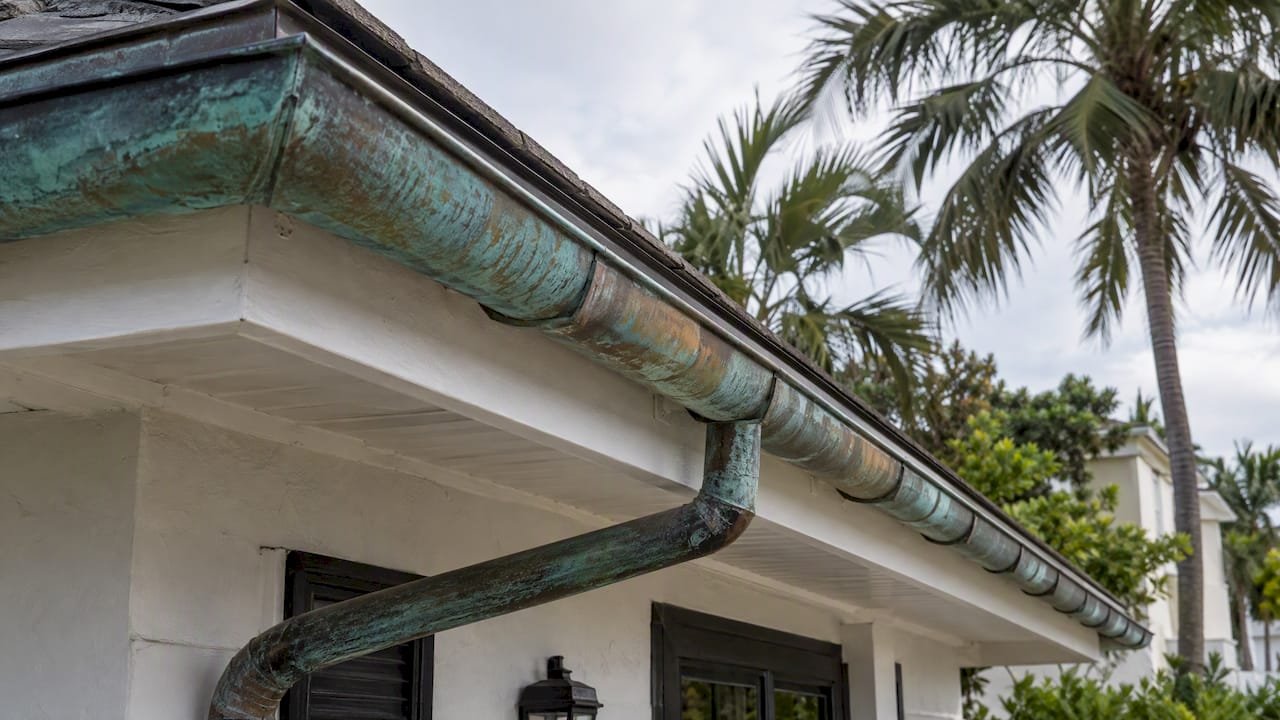
Aluminum goes the other way. It comes in many baked-on colors, so you can match your trim, soffit and fascia exactly and keep that color for years. If you love the copper look but not the price, you can choose a metallic finish, though some homeowners find faux copper looks artificial next to the real thing. Consider how it will read from the street before you commit.
Gutter shape affects looks too. Half-round profiles suit older and traditional homes, while K-style hides against the fascia and moves more water. We compare them in K-style vs. half-round gutters.
The downsides of copper, plainly
Copper’s pros are real, but so are the points homeowners need to weigh:
- Price. The upfront cost is the biggest hurdle, and repairs cost more too.
- Theft risk. Because of copper’s high value, an insurance expert advises homeowners to photograph their installation so a claim reflects the real replacement cost of the material.
- Specialist labor. Soldering and matching hardware narrow your choice of installers.
- Uncontrolled aging. The color shift is natural, so you cannot dial it in.
- Compatibility. It must not touch aluminum or sit upstream of it.
Disadvantages of aluminum, and how to manage them
- Denting. Thicker gauge and sound hanger spacing reduce the risk.
- Finish wear. A quality baked-on coating and occasional inspection help.
- Joint leaks. This is why seamless runs matter. Fewer joints means fewer places to fail.
- Lifespan shorter than copper. True, but 20 to 30 years is a long service life for a part that is easy to replace and costs far less.
Keeping either metal working: upkeep that matters most
No material fixes a clogged gutter. The National Association of Home Builders advises keeping gutters and downspouts free of leaves and other objects, and in Florida, where oak, palm and pine debris falls year round, that is a recurring job. A simple routine:
- Clear debris from the gutters and downspouts as often as your trees demand. Our seasonal gutter checklist helps you decide when to do it yourself and when to call us.
- Run a hose along each run to check that water reaches the downspouts and does not pool.
- Look at seams, end caps and corners for gaps or stains.
- Check the fascia behind the gutter for soft spots or peeling paint.
- Consider gutter guards if your lot is heavily treed.
It also helps to know what sits behind the gutter. A properly installed drip edge and gutter apron direct roof water into the gutter and keep it off the fascia, which protects the wood whatever metal you pick.
For more detail, see our maintenance tips for seamless gutters.
Which should you choose?
Use these criteria:
- Choose aluminum if you want the best value, you want a color that matches your trim, you may sell within 10 to 15 years, or you want the widest choice of qualified installers.
- Choose copper if your home is historic or high-end, you plan to stay for decades, you want the natural patina, and your budget accommodates the premium and a specialist installer.
- Choose neither mixed with the other, and match the metal to anything already on the roof.
A supplier comparison reaches the same conclusion, calling aluminum the best overall value for most homes and copper the pick for luxury looks and longevity. If you are also weighing a cheaper material, our article on aluminum vs. vinyl gutters covers that side of the range.
Our perspective
We have installed gutters in Florida for more than 20 years, and the question we hear most is whether aluminum is “good enough.” For most homes it is more than good enough, as long as the system is built for our climate.
What decides how a gutter performs here is not a brand-name metal. It is seamless runs cut to your roofline, salt-air-resistant aluminum, correct pitch, strong hangers, clean corners and a plan to keep debris out. We build every system that way, and we back it with a Lifetime No-Clog Guarantee and a promise not to leave the job until you are satisfied.
Put the money you would have spent on a premium metal into the parts that protect your home: properly sized downspouts, sound fascia and soffit, and gutter guards where trees overhang. That is holistic protection, and it fortifies your home more than a material upgrade alone.
Brian
Get a seamless aluminum quote for your home
We design seamless gutter systems for Sarasota and nearby counties, with custom-fitted aluminum, downspouts, gutter guards, and soffit and fascia work to match. We also handle repair, cleaning and storm damage restoration. Our satisfaction-or-no-payment promise means you do not pay until you are happy with the result. Start with gutter installation, or contact us through our home page for an inspection and a written quote.

If you are replacing aging gutters, see the signs your gutters need replacing. If you need fascia or soffit work done at the same time, our soffit and fascia installation service handles both in one visit.
FAQ
Are copper gutters worth it?
They can be, for the right home. Copper offers a very long service life and a distinctive patina, which suits historic and high-end properties and owners who will stay for decades. For a typical house, the added cost is hard to recover, and aluminum delivers dependable protection at a much lower price.
What is the downside to copper gutters?
Cost is the main one, since reported installed prices are several times those of aluminum. Copper also attracts theft because of its value, needs a specialist installer, and cannot be combined with aluminum. Photographing your installation helps ensure an insurance claim reflects its real value.
What are the disadvantages of aluminum gutters?
Aluminum can dent, its finish can wear, and long exposure to moisture and salt can cause corrosion. Seamless construction, a quality finish and routine checks address most of these issues. Keeping gutters clear also prevents standing water, which causes much of the damage.
What is the best material for gutters in Florida?
For most Florida homes, seamless aluminum is the best balance of cost, durability and appearance, provided it is salt-air resistant and installed with proper pitch and hangers. Copper suits owners who want its look and have the budget. The right answer depends on your home, your budget and how long you plan to stay.
Can I use copper and aluminum gutters together?
No. Copper runoff can speed up corrosion on aluminum, so keep the two metals apart, including copper accents on the roof above an aluminum gutter. If you are replacing part of a system, choose a material compatible with the rest.
Sources
- Copper vs Aluminum Gutters: Cost, Lifespan, Choice
- Gutter Materials Breakdown: Aluminum, Steel, Copper, Vinyl and Beyond
- Vinyl vs. Steel vs. Aluminum Gutters
- The pros and cons of copper gutters
- Routine Home Maintenance, NAHB
- Drip Edge vs. Gutter Apron: What Each Does and Which You Need