

Yes, gutters can damage a foundation, but only when they fail at their job. When roof runoff isn’t carried away from the house, it can quickly saturate the soil around the building and wick through the foundation, which leads to mold, rot and durability problems. The good news is that this is one of the most preventable causes of foundation trouble. Clean gutters, downspouts that discharge well away from the walls, and soil that slopes away from the house handle most of it.
TL;DR
- Clogged, leaking or undersized gutters dump roof water along the foundation, saturating the soil and adding pressure against the walls.
- Warning signs include cracks, bowing or buckling walls, peeling paint, seepage, mold, and streaks or erosion under the gutter line.
- Downspouts should discharge 5 to 10 feet from the house, and the soil should slope away from the walls.
- Fix the water source first. Foundation repair, insurance claims and mold cleanup all go better once the gutters work.
- Foundation repair costs run into the thousands, while gutter repair or replacement is the cheaper way to stay out of that range.
Table of Contents
- How gutters end up harming a foundation
- Signs your gutters may be hurting your foundation
- Why Florida homes need extra attention
- How to protect your foundation: a practical checklist
- Do gutter guards help?
- When the damage has already started
- What foundation repair costs
- Does homeowners insurance cover it?
- Perspective: why we start with the gutters
- Let us check your gutters before the next storm
- FAQ
- Sources
How gutters end up harming a foundation
A roof collects a lot of water. Gutters and downspouts exist to gather it and deliver it somewhere harmless. When any part of that chain breaks, the water falls straight down beside your walls instead, and the soil there takes the load.
Here is the usual sequence:
- Debris blocks the gutter. Leaves, shingle grit and pine needles stop water from reaching the downspout, so it spills over the front edge.
- Water pools at the base of the wall. Soil at the drip line becomes saturated and starts to wash away.
- The soil changes. Saturated soil can swell, shrink as it dries, or settle. Either way, it stops supporting the foundation evenly.
- Pressure builds. Water-logged soil pushes against basement and stem walls, which can open cracks and leaks.
- Moisture moves inside. The water can wick through the foundation to the interior, where it feeds mold and rot.
The federal Building Science Education Solution Center describes the core problem plainly: roof runoff that isn’t drained away saturates soil and moves through the foundation. Home Innovation Research Labs makes the same point as a building-science principle: exterior water needs an active path from the roof to a safe place away from the foundation.
The gutter problems that cause the most trouble
Not every gutter flaw sends water to the foundation. These are the ones that do:
- Clogs. The most common cause. Water overshoots the trough and lands in the same spot every storm.
- Sagging runs. If a section holds water instead of moving it, it overflows at the low point.
- Leaking seams and corners. Water drips from the joint and soaks one patch of soil. Our guide to gutter corner leaks explains why they happen and how they are fixed.
- Downspouts that end at the wall. A downspout with no extension or shoe empties right at the foundation.
- Undersized gutters. In heavy rain, a trough that is too small overflows even when it is clean.
- Missing gutters. Rooflines with no gutters send a curtain of water along the entire wall.
If you suspect overflow, you don’t need to guess. Our hose test for gutter overflow shows you where water escapes before you pay for any repair.
Signs your gutters may be hurting your foundation
Foundation trouble rarely announces itself with one dramatic event. It shows up as small clues that point back to water. Prince George’s County’s homeowner drainage guide lists cracked or buckling walls, peeling paint, seepage and mold among the signs, and notes that streaks or watermarks on the wall and erosion along the drip line point to overflowing gutters.
Walk the property during or just after a steady rain and check these:
Outside the house
- Vertical streaks or watermarks on siding or stucco below the gutter
- A trench or bare, washed-out strip of soil along the drip line
- Water pooling beside the foundation, or mulch and sand pushed out of the beds
- Gutters overflowing at corners or in the middle of a run
- Downspouts that discharge within a few feet of the wall
- Cracks in the foundation wall or stucco, especially near a downspout
Inside the house
- Damp, musty smells in a garage, crawl space or lower level
- Peeling paint or bubbling finish near the base of walls
- Visible mold or moisture stains on lower walls
- Doors or windows that begin to stick
- Cracks that widen or walls that appear to bow
Any one of these can have other causes, and a single hairline crack is common in many homes. A cluster of signs, especially ones that sit beneath a failing gutter, is the pattern to take seriously.
Why Florida homes need extra attention
Florida roofs shed a lot of water in a short time during summer storms, and many homes sit on lots with sandy, flat ground. Flat ground matters, because water that can’t run away slowly will sit beside the house. Sandy soil drains quickly, but a stream of water from an overflowing gutter can still wash soil out from beside the footing and leave an eroded trench.
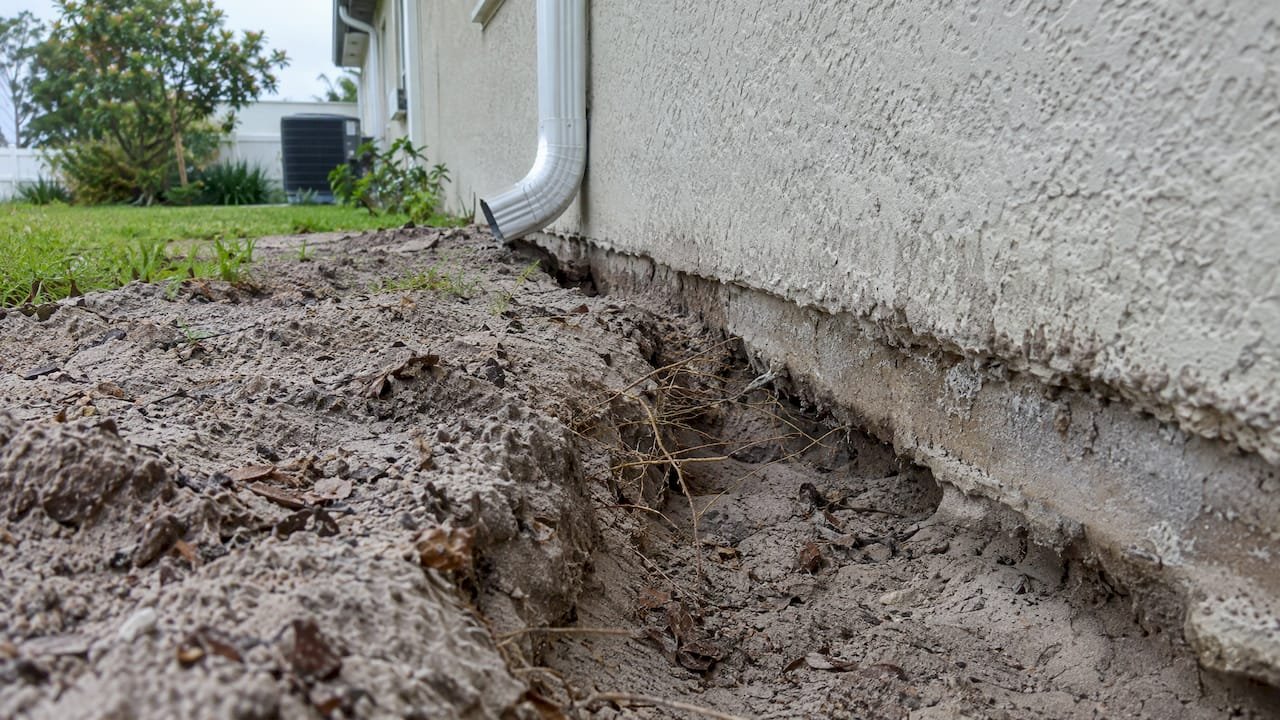
Salt air adds a second problem for the gutters themselves. Corrosion weakens fasteners, seams and thin metal over time, and a gutter that fails quietly is the one that sends water to the wall. This is why we install seamless aluminum built for Florida’s coastal conditions. Fewer seams means fewer places for leaks to start. If you are weighing options, our comparison of seamless gutters vs regular gutters covers the difference.
Pool cages are another Florida-specific wrinkle. Large screened enclosures shed water too, and that runoff has to go somewhere. Our guide to pool cage gutters covers how contractors handle it.
How to protect your foundation: a practical checklist
You can do most of the prevention yourself, and the rest is a quick conversation with a gutter contractor.
1. Keep gutters clear
The Building Science Education Solution Center recommends removing debris at least once per year, and watching the gutters during a typical rain to see whether they work. In Florida, with oak, pine and palm debris and heavy rain, many homes need more frequent attention. Our seasonal gutter checklist helps you decide when to do it yourself and when to call a pro, and our maintenance tips for seamless gutters cover the routine.
2. Send downspouts 5 to 10 feet away
The same federal source says downspouts should have shoes and direct water 5 to 10 feet from the foundation. It also describes two better endpoints: piping that carries water to a sloping final grade more than 5 feet away, or an underground catchment more than 10 feet away that is not connected to the foundation drain system.
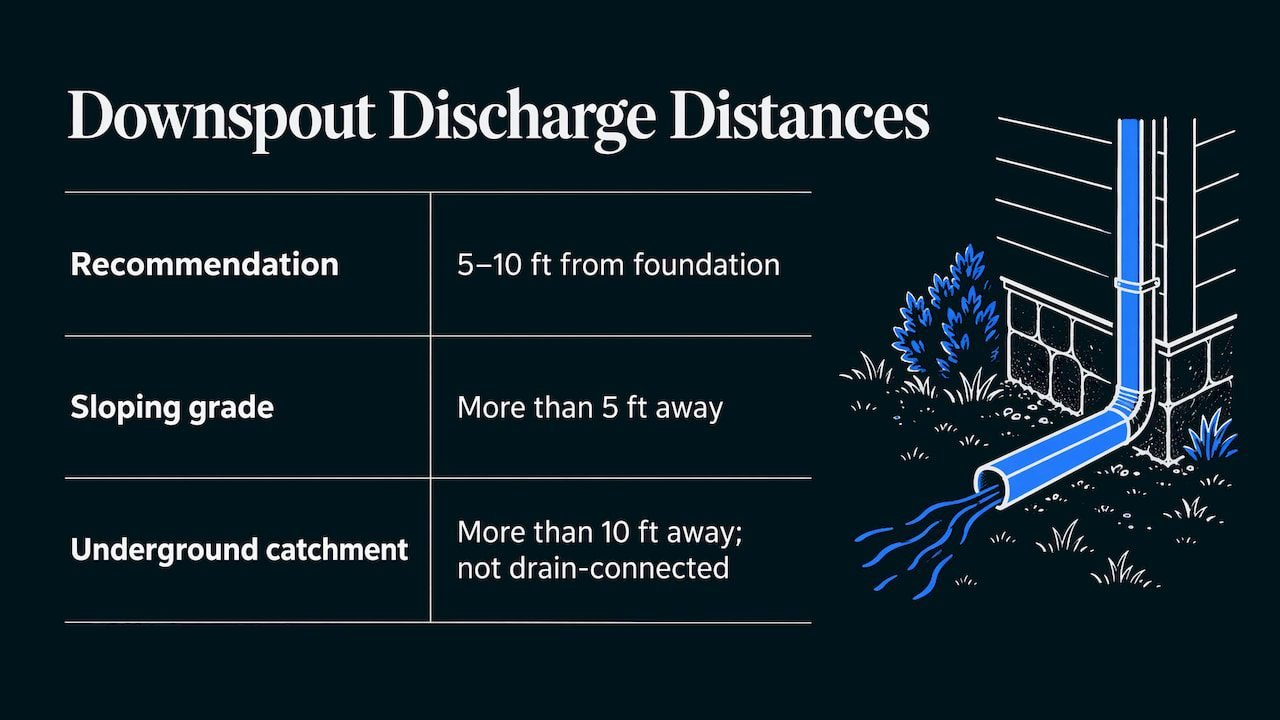
The National Association of Home Builders’ research center adds that roof drainage should extend at least 5 feet where soil is expansive or collapsible. If your downspouts currently end at the wall, adding extensions or buried drain lines is one of the highest-value fixes available. We install and relocate them as part of our downspout installation service.
3. Check the grade
Gutters only deliver water to the ground. The ground has to do the rest. The NAHB guidance calls for a minimum 5% final grade, which is a 6-inch drop within the first 10 feet, or drains or swales where that isn’t possible. Look for low spots beside the house where water sits after rain, and fill or regrade them so water moves outward.
For more property-level thinking, particularly on larger lots, stormwater management in Sarasota is a useful topic to explore alongside your gutter plan. Our own 15-minute yard tests for roof runoff are a simple way to see where your water goes.
4. Protect the drip line when needed
Where replacing gutters isn’t practical right away, county guidance suggests protecting the soil at the drip line with gravel or vegetation to slow erosion and help water move away, as long as proper grading is maintained. Treat this as a stopgap that buys time, because it doesn’t replace working gutters.
5. Look beyond the gutters
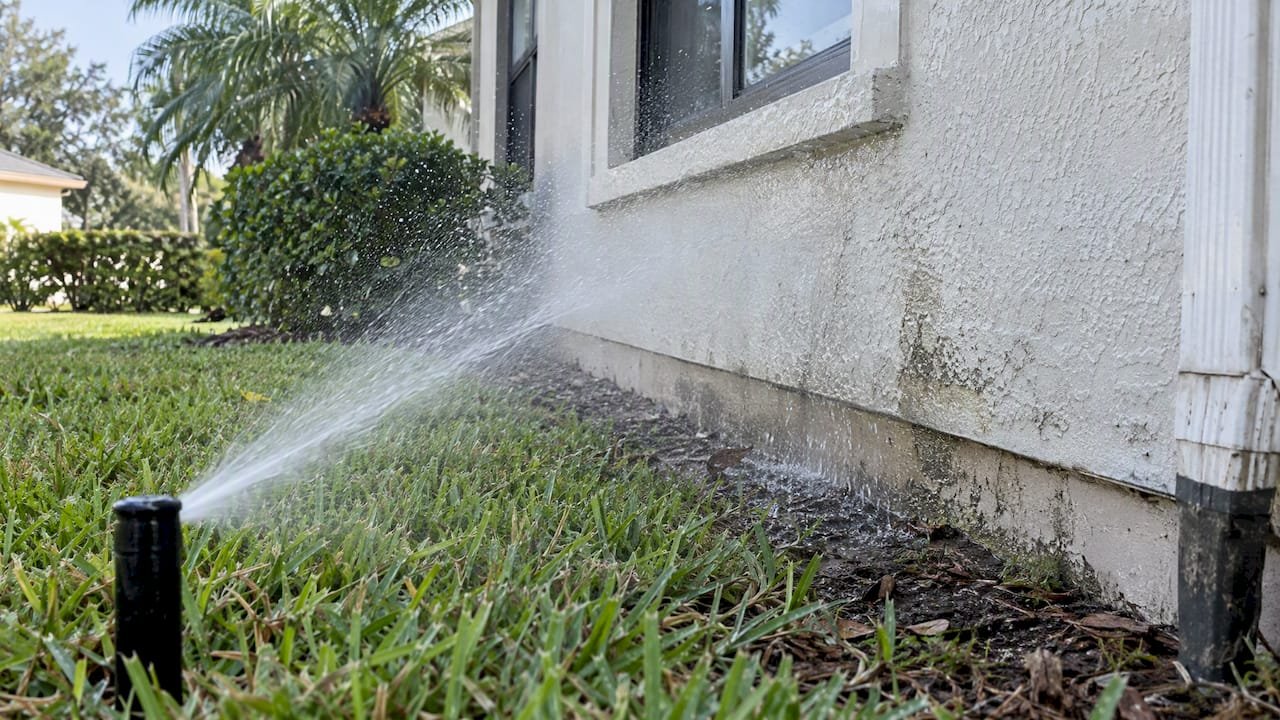
A water-management engineering lesson also recommends caulking and sealing windows, inspecting the roof, and checking that sprinklers and irrigation aren’t wetting the walls and foundation. In Florida, sprinkler heads aimed at the house are a surprisingly common source of constant moisture at the base of a wall.
Do gutter guards help?
Gutter guards can reduce how often you need to clean, which means fewer overflow events. They are not a set-and-forget fix, though: InterNACHI notes that covered gutter systems may help prevent excessive debris buildup but are not maintenance-free. Choose a guard that suits your trees and roof, and still schedule an inspection. Our guide on whether gutter guards work explains what to expect, and our Lifetime No-Clog Guarantee is built around keeping your gutters flowing.
When the damage has already started
If you have seen cracks, seepage or mold, fix the water source before anything else. Cosmetic repairs over an active moisture problem won’t last.
Stop the water and protect your home
If water has entered the house, the EPA advises addressing electrical, structural, slip and fall hazards, removing standing water and wet materials, and drying the home and its contents within 24 to 48 hours when possible. If the basement is dangerous or the cleanup is too difficult, use qualified professionals.
The EPA also recommends photographing the damage and contacting your insurance company before cleanup when possible. It also warns to fix the water problem and clean the mold before painting or caulking, because painting or caulking over mold will not prevent it from growing. And if mold is cleaned but the water problem remains, the mold will most likely return.
Get a foundation specialist for cracks and movement
Gutters can stop the cause, but they can’t repair a structure that has already moved. If you see widening cracks, bowing walls, or doors and windows that have started to stick, have a licensed structural engineer or foundation repair company evaluate the home. Earlier diagnosis matters. Tom Silva, general contractor for This Old House, emphasizes that catching foundation cracks early can keep minor repairs from becoming major structural work.
What foundation repair costs
This Old House’s U.S. estimates put foundation repair at an average of $5,179, with most projects costing $2,224 to $8,134 (2026 pricing). The range depends on the repair method:
| Repair type | Typical U.S. cost |
|---|---|
| Crack filling | $250 to $800 |
| Waterproofing | $2,300 to $7,300 |
| Piering | $1,000 to $3,000 per pier |
| Lifting and leveling | $20,000 to $23,000 |
The same source says costs depend on the size and severity of the damage, foundation type, soil conditions, repair method, access, labor, permits, materials and location. Your local quote will differ, so treat these as a scale of the problem rather than a price for your house.
The comparison is the point. Fixing a gutter that overflows, extending downspouts, and regrading a low spot are small jobs next to a foundation project. Protecting the foundation from water costs far less than repairing it afterward.
Does homeowners insurance cover it?
Often, not in the way people hope. Flood damage is excluded from standard homeowners policies and needs a separate policy through the National Flood Insurance Program or a private insurer, according to the Insurance Information Institute. Insurance regulators also advise shoppers to ask about sewer, drain or sump-pump backup, wear and tear, flood and earthquake coverage, since these are listed separately or offered as optional coverage.
What your policy covers depends on its wording and on the cause of the damage, so ask your agent before you file and document everything first. Gradual damage from poor maintenance is a different conversation from a sudden event, and your insurer is the one to say how it classifies yours.
Perspective: why we start with the gutters
When a homeowner calls us about cracks or damp walls, we look up before we look down. In our experience, the roofline tells you a lot. A gutter that overflows at the same corner every storm, or a downspout that empties beside the wall, is a water delivery system pointed in the wrong direction.
That is why we focus on seamless aluminum built for Florida’s salt air, correct downspout placement, and a Lifetime No-Clog Guarantee. A gutter is only protecting your foundation if it is working in the rain you actually get, and the way to make sure is to size it properly, pitch it correctly, fasten it well and send the water somewhere safe.
We would rather prevent a foundation problem with a well-installed gutter system than have you find out the hard way. Our promise is simple: we don’t leave your job site until you are satisfied.
Brian
Let us check your gutters before the next storm
Five Star Aluminum has more than 20 years of experience installing seamless gutters, downspouts, soffits and fascia for homeowners in Sarasota and nearby counties. If your gutters sag, leak, overflow or drain beside the wall, we can inspect them and recommend the right fix, whether that is gutter repair, a new seamless gutter installation or relocated downspouts.

We back our work with a Lifetime No-Clog Guarantee and a satisfaction-or-no-payment promise. Not sure whether your gutters need replacing? Our guide to the signs your gutters need replacing is a good first read, and you can reach us anytime through our website to schedule an estimate.
FAQ
Do gutters cause foundation problems?
Working gutters protect a foundation. Failing ones can harm it. When clogged, leaking or poorly placed gutters let roof runoff soak the soil beside the house, water can saturate the soil and wick through the foundation, causing mold, rot and durability problems.
How far should downspouts discharge from the house?
The federal building science guidance says to direct water 5 to 10 feet from the foundation, using extensions, pipes to a sloping grade, or a catchment farther out. Wherever the water lands, the ground should slope away from the house.
Can I fix this myself?
Cleaning gutters and adding a downspout extension are simple jobs for many homeowners. Resloping a sagging run, replacing corroded sections or fixing grade problems is more involved, and a second-story roofline is a ladder risk. If you would rather have it done right the first time, a gutter professional can handle it.
Does homeowners insurance cover foundation damage from water?
Usually not for flooding, which standard homeowners policies exclude. Coverage depends on your policy’s wording and the cause of the damage, so photograph everything and call your insurer or agent before cleanup begins.
How much does foundation repair cost?
This Old House’s 2026 estimates give an average of $5,179 and a typical range of $2,224 to $8,134, though lifting and leveling can reach $20,000 to $23,000. A foundation specialist’s inspection will give you a real number for your home.
Sources
- Foundation Drain Gutters Downspouts, Building Science Education Solution Center
- Rain & Groundwater Management: Reducing the Risk of Water Intrusion, Home Innovation Research Labs
- A Homeowner’s Guide to Drainage Problems and Solutions, Prince George’s County
- Properly Size Roof Drainage (Gutters and Downspouts)
- Inspecting Gutters and Downspouts, InterNACHI
- Text Version of the Flooded Home, US EPA
- Homeowner’s and Renter’s Guide to Mold Cleanup After Disasters, US EPA
- A Brief Guide to Mold, Moisture and Your Home, US EPA
- How Much Does Foundation Repair Cost?, This Old House
- Which disasters are covered by homeowners insurance?, Insurance Information Institute
- Homeowners Insurance, NAIC
- Storm Water Management