

Expect soffit and fascia replacement to run roughly $1,050 to $3,300 for most homes, or about $6 to $20 per linear foot. Replace, not patch, once you see rot, sagging, or signs that attic ventilation has failed. The smartest next step is a visual inspection followed by two or three written quotes so you can compare scope and price before committing.
TL;DR:
- Bundling soffit and fascia work with an active roof or gutter job can lower total cost because crews and equipment are already on site.
- Compare written bids by scope and materials, not price alone; confirm they cover ventilation, drip edge, gutters, hidden rot, and labor and material warranties.
- A small repair on a one story home may suit an experienced homeowner, but hidden rot, multiple stories, or ventilation changes call for an insured professional.
- Use soffit and ridge vents, with baffles at each rafter bay, to provide attic ventilation equal to at least 1/300 of floor area.
Table of Contents
- What Soffit and Fascia Are and Why They Matter
- Signs Your Soffit or Fascia Needs Replacement
- Costs and Cost Factors: National Ranges and What Affects Price
- Material Options and Tradeoffs
- Replacement Overview: Steps, DIY Feasibility, and Safety
- How to Choose a Contractor: Questions, Red Flags, and Warranties
- Maintenance, Attic Ventilation, and Long-Term Prevention
- A Seasoned Installer’s Take on Getting This Right
- How Five Star Aluminum Can Help With Your Soffit and Fascia
- FAQ
- Sources
What Soffit and Fascia Are and Why They Matter
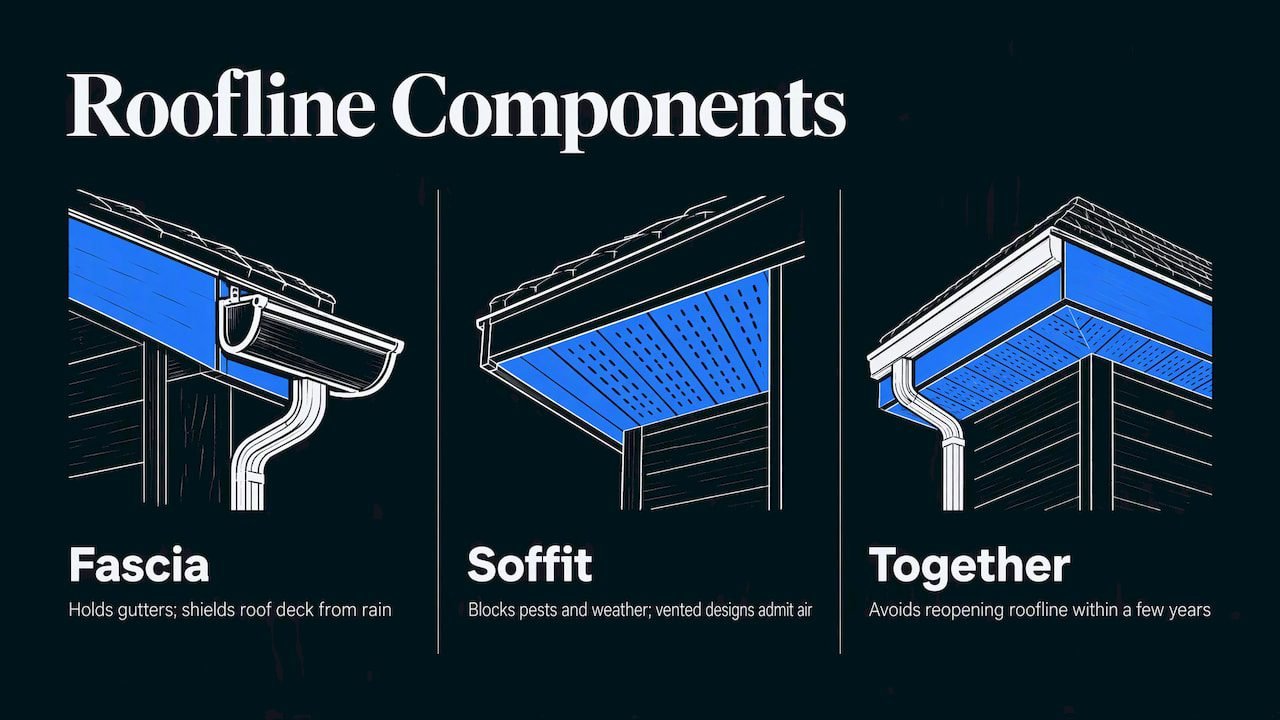
Fascia is the straight board that runs along the edge of your roofline, holding your gutters and giving the roof a finished edge. Soffit is the material underneath the roof overhang, closing the gap between the fascia and your exterior wall. Together they do more than finish the look of a roofline.
Fascia bears the weight of your gutters and shields the edge of the roof deck from rain. Soffit protects the attic from pests and weather while, in a vented design, letting fresh air flow into the attic space. Because both pieces sit in the same weather-exposed strip and tie into the same gutter system, we usually replace them together. Tackling one without the other often means reopening the same section of roofline within a few years.
Signs Your Soffit or Fascia Needs Replacement
A simple walk around your home tells you most of what you need to know. Look up at the roofline on a clear day and check for these warning signs.
- Soft, spongy spots or visible rot where a screwdriver sinks in easily
- Sagging or wavy fascia boards, especially near gutter hangers
- Peeling paint or swelling that signals moisture trapped behind the surface
- Gaps, holes, or chew marks where birds, squirrels, or insects have gotten in
- Gutters pulling away from the house or exposed rafter tails with no cover
- Musty smells, dark staining, or condensation in the attic near the eaves
Any one of these points to repair. Several together, especially rot paired with attic moisture, usually means full replacement is the more reliable fix.
Costs and Cost Factors: National Ranges and What Affects Price
Budget-wise, most professional soffit and fascia jobs land between $1,050 and $3,300, with per-foot pricing running $6 to $20 depending on material and labor in your area. Smaller repair jobs can come in lower, while larger homes with extensive rot or premium materials can push past $6,800.
A typical mid-range project covering 100 linear feet of aluminum fascia and soffit generally costs several hundred to a few thousand dollars, according to cost data compiled by HomeAdvisor, before factoring in rot repair or gutter detachment.
Several variables move your quote up or down:
- Material choice: wood costs less upfront but needs more upkeep; aluminum and composite cost more but last longer
- Labor and accessibility: steep rooflines, multiple stories, or tight eaves raise installation time
- Gutter and drip-edge work: detaching and resetting gutters, or adding new drip edge, adds to the scope
- Rot repair: replacing damaged rafter tails or sheathing behind the fascia increases both material and labor costs
One scheduling tip worth knowing: bundling soffit and fascia work with a roof or gutter project already underway cuts your total cost because the crew and equipment are already mobilized on-site.
Material Options and Tradeoffs
Material choice shapes both your upfront cost and how much attention the eaves need over the following decades.
- Wood costs the least per foot but needs regular painting, sealing, and inspection since it absorbs moisture and attracts pests when left unprotected
- Vinyl and PVC soffit and fascia resist moisture and need almost no maintenance, though they can warp or discolor under intense heat and UV exposure over time
- Aluminum holds up well against rot, pests, and salt air, making it a strong fit for coastal and humid climates where other materials degrade faster
- Composite and fiber cement (Hardie-style) boards offer long service life and can be painted to match trim, at a higher material cost than vinyl
We install aluminum and vinyl systems built to handle coastal salt air and humidity, as those materials hold up better than wood in such conditions.
Replacement Overview: Steps, DIY Feasibility, and Safety
A full soffit and fascia replacement follows a predictable sequence, whether a crew or a homeowner handles it.
- Detach and lower the gutters along the affected section
- Remove the old fascia board and inspect the rafter tails and sheathing behind it for rot
- Replace or repair any damaged framing before moving forward
- Install new drip edge and fascia board, fastened securely into solid wood
- Fit new soffit panels, including vented panels where airflow is needed
- Reinstall and reseal the gutters, then check for level and proper water flow
A small, single-story section with no rot behind the boards is a realistic weekend project for a homeowner comfortable on a ladder with basic tools. Multi-story homes, extensive rot, or ventilation changes call for a licensed pro who carries insurance for fall risk and structural repair.
Pro Tip: Check the rafter tails before you buy a single board. Hidden rot behind the fascia changes the whole scope of the job.
How to Choose a Contractor: Questions, Red Flags, and Warranties
A written quote protects you more than a verbal estimate ever will. Before signing anything, ask a few direct questions and watch for warning signs.
- Ask how many years the crew has installed soffit and fascia, and request local references
- Confirm they carry liability insurance and hold any required local licensing
- Ask whether the quote includes ventilation fixes, drip edge, and gutter reinstallation, or if those are separate line items
- Compare bids on scope and material, not just the bottom-line number
- Look for a clear written warranty on both materials and labor
We back our installations with a Lifetime No-Clog Guarantee and stand by a simple rule: we do not consider a job finished until you are satisfied with it. Walk away from any bid with no written contract, a vague scope of work, or a price far below every other quote you received.
Maintenance, Attic Ventilation, and Long-Term Prevention
Routine care extends the life of soffit and fascia far beyond what materials alone can do. Clean your gutters, reseal joints, and touch up paint or caulk where needed, checking the whole roofline twice a year and after major storms.
Ventilation matters just as much as the materials themselves. Building America guidance from the Department of Energy recommends a net free ventilating area of at least 1/300 of your attic’s floor space, split between low soffit vents and high ridge vents, paired with baffles at each rafter bay.
- Keep soffit vents clear of insulation and debris so air can move freely
- Install baffles at the eaves to maintain airflow even where insulation is thick
- Pair continuous soffit vents with ridge vents rather than isolated spot vents for steadier airflow
Continuous soffit vents paired with proper baffles reduce moisture problems compared with spot vents alone, which matters most in humid climates where trapped moisture leads to mold and wood decay. For a deeper look at how these rules apply to your attic, our soffit vs. fascia checklist walks through the ventilation math in plain terms.
A Seasoned Installer’s Take on Getting This Right
After 20-plus years installing soffit and fascia across Florida roofs, I’ve found most homeowners wait too long to act on the first signs of rot. The fix is rarely complicated: inspect twice a year, budget for the $1,050 to $3,300 range most projects fall into, and combine the work with a gutter or roof project whenever the timing allows. That last point alone can save you a mobilization fee. If you’ve spotted sagging, soft wood, or musty attic air, get a local inspection before the next storm season tests your roofline.
— Brian
How Five Star Aluminum Can Help With Your Soffit and Fascia
We handle soffit and fascia installation and soffit and fascia repair alongside attic ventilation improvements and gutter coordination, using salt-air-resistant aluminum and vinyl built for Florida’s climate.

We back every installation with extensive hands-on experience protecting homes in coastal Florida. If your roofline is showing rot, sagging, or ventilation trouble, request a quote through our services page and we will walk the project with you from inspection to finished install.
FAQ
How much does it cost to replace soffits and fascia?
Most professional soffit and fascia replacement projects cost between $1,050 and $3,300, or roughly $6 to $20 per linear foot. Larger homes, extensive rot, or premium materials can push the total higher.
How much should a new soffit and fascia cost?
A fair price depends on material and linear footage, but $6 to $20 per linear foot is the typical professional range. Get two or three written quotes covering the same scope of work to compare fairly.
Can I replace my soffit and fascia myself?
A small, single-story section with no hidden rot is realistic for a homeowner with basic tools and ladder experience. Multi-story homes, extensive rot, or ventilation upgrades are safer and more reliable in the hands of a licensed, insured contractor.
How much should a contractor charge to remove and replace soffit and fascia?
Contractor pricing generally lands within the same $6 to $20 per linear foot range reported nationally, adjusted for local labor rates and job accessibility. A written quote that breaks out material, labor, and any rot repair gives you the clearest comparison between bids.
Sources
- How Much Does It Cost to Replace or Repair Fascia Boards and Soffits? 2025 Data
- Measure Guideline: Guide to Attic Air Sealing