

A noisy downspout is usually one of three things: water dripping onto a metal elbow, thin metal ringing like a drum, or loose hardware rattling in the wind. Most of it can be calmed with an inexpensive fix. Some of it is a warning that your gutters are loose, pitched wrong or draining the wrong way. This guide helps you tell the difference, quiet the sound, and know when it is time to have a pro take a look.
TL;DR
- Steady dripping or a hollow drumming that fades when the rain stops is usually harmless. Gurgling, backing up or banging points to a clog or loose hardware.
- The classic fix for dripping is a nylon rope run from the gutter outlet to the elbow so water follows the rope instead of free-falling.
- A sponge or mesh in the elbow is an overnight stopgap only, because standing water can grow mold.
- Noise paired with sagging gutters, overflow or water near the foundation is a drainage problem, not just an annoyance.
- If tightening and a quick fix do not solve it, call a gutter contractor before the next storm season.
Table of Contents
- Why your downspout is loud when it rains
- Diagnose the sound before you fix it
- Fixes that quiet a noisy downspout
- When noise means a drainage problem
- Does your material or style make it louder?
- Our perspective: quiet is a design detail, not an afterthought
- When to call a professional
- Keep it quiet: simple maintenance
- Need a quieter, better-draining system?
- FAQ
- Sources
Why your downspout is loud when it rains
Gutter systems are thin metal channels that collect a lot of water fast. A 1,500-square-foot roof sheds a surprising volume in a Florida downpour, and all of it is funneled through a few small outlets. The noise comes from how that water moves and what it hits.
Water hitting the elbow. Where the downspout bends, water that falls freely from the gutter outlet strikes the metal elbow. Water hitting a metal downspout elbow can cause a plinking noise, and the sound travels up the pipe.
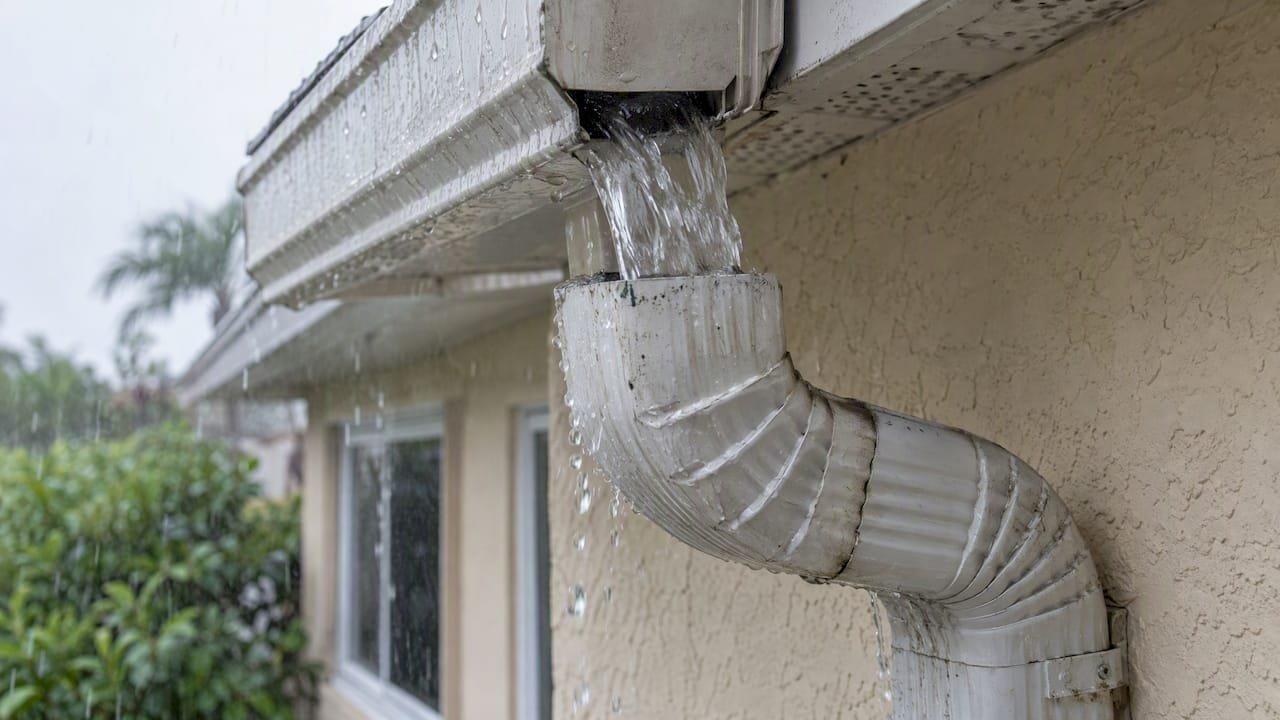
Thin metal that resonates. Lightweight downspouts behave like a drum. Even a modest trickle can sound loud, especially if the downspout runs beside a bedroom or a lanai wall. Heavier-gauge aluminum and well-secured, properly fitted sections tend to ring less than flimsy, rattling pieces.
Loose parts. If a gutter has loose parts, they are bound to rattle or clang in high winds or a rainstorm. A loose screw, a bracket that has pulled away, or a downspout strap that no longer grips all produce metal-on-metal noise.
Partial clogs. When leaves, shingle grit or a nest restrict flow, water gurgles, pools and strikes the pipe unevenly. That sound is different from a drip, and it matters more.
Diagnose the sound before you fix it
Stand outside during steady rain, not a cloudburst, and listen. Then listen again from the room closest to the noisy run. Different sounds point to different causes.
| What you hear | Likely cause | First move |
|---|---|---|
| Rhythmic plinking or dripping | Water falling from the outlet onto the elbow | Rope or splash dampener |
| Hollow drumming that fades when the storm ends | Thin metal resonating under flow | Add padding, secure straps |
| Rattling or banging in wind | Loose hanger, strap or section | Tighten or replace hardware |
| Gurgling, spitting, water backing up | Partial clog in the elbow or underground line | Clear the downspout, check the drain line |
| Splashing at the bottom | Water dropping onto hard ground or a bare splash block | Extension, splash block or diverter |
If the noise only shows up in heavy rain and the gutter is also spilling over the edge, treat that as an overflow problem first. Our walkthrough on testing gutter overflow with a hose helps you tell a clog from an undersized or mis-pitched system before you spend money.
A note on banging that is not from the gutters
Before you climb a ladder, make sure the sound is coming from the gutters at all. A thump when a faucet shuts off is a plumbing issue, and you can read about water hammer in plumbing pipes if that sounds like your house. If the bang only happens in wind or rain and you can see the downspout shift, trace it outside: follow the run with your hand and look for a strap, bracket or joint that moves.
Fixes that quiet a noisy downspout
Start with the cheapest, most permanent fix and work toward the stopgaps.
1. Tighten and replace loose hardware
This is the first step for rattling and banging. Check every downspout strap, every bracket and every gutter hanger. A loose screw or bracket can often be tightened to solve the rattle. Replace any that are bent or no longer hold. Where the gutter itself sags or has pulled from the fascia, hanger spacing matters: see our guide to how far apart gutter hangers should be.
A rubber or foam pad between a strap and the downspout can also cut metal-on-metal vibration. Pipe insulation foam wrapped around a section that touches the siding is another easy dampener.
2. The rope trick for dripping
This is the most widely used DIY fix for the plink-plink sound. A 3/8-inch nylon rope runs from the gutter drain opening to the elbow, so water wicks down the rope instead of free-falling into the bend.
How it goes together, according to the same Family Handyman project:
- Apply gutter seaming caulk around the drain opening, leaving a 1/4-inch gap so water can still get through.
- Press the rope into the caulk beside the gap.
- Run the rope down the inside of the downspout to the elbow.
- Use more caulk to secure the rope at the elbow bend, then let it cure before the next rain.
You will need a ladder, caulk gun, gutter seam sealant and about as much rope as the downspout run is long. If the downspout is on a second story, this is the point where many homeowners decide it is not worth the climb. That is a reasonable call.
3. Splash dampeners and foam inserts
Store-bought rain noise dampeners are small flexible pieces of metal backed with sound-absorbing foam that hook over the gutter outlet or sit in the elbow. They do the same job as the rope with less fuss, though they can need cleaning if debris collects on them. Bear in mind that anything placed inside a downspout can catch leaves, so check it after storms.
4. Sponges and mesh: overnight only
People often stuff a sponge or mesh bag in the elbow. It works for quiet, but a sponge is a temporary fix, and stagnant water can make it grow mold. Use it as a one-night measure when you have guests or someone is sleeping beside the wall, then remove it and dry it. It should never be a permanent plug, because it also restricts flow and can back water up into the gutter.
5. Extra bends, a longer run or a different outlet
A second elbow or an offset can slow falling water, but each added bend is another spot where debris can catch. If you are already replacing sections, a contractor can reposition the outlet, change the elbow angle or choose a larger downspout so water runs along the wall of the pipe rather than dropping through the middle.
6. Rain chains as a quiet alternative
Rain chains replace a downspout with a chain or linked cups that water follows downward. They are quiet and attractive. They are not built to handle exceptionally heavy rain, which is a real consideration in Florida, where summer storms can drop inches in an hour. Water can swing off the chain, splash against siding and soak the same spot repeatedly. If you like the look, read about how decorative rain chains handle runoff and plan the ground beneath them so water has somewhere to go. For most homes, a rain chain works best on a small, covered roof section rather than the main run.
When noise means a drainage problem
Quieting a drip does nothing if the sound is a symptom. Noise can be a sign of loose gutters or broken hangers, incorrect pitch that sends excessive runoff toward the home, or downspouts that drain in the wrong direction. Look for these together with the noise:
- Sagging or pulling gutters. Water is heavier than it looks, and a sagging run holds standing water that adds weight and noise. Hangers may be too far apart or the fascia behind them may be soft.
- Water spilling over the front edge. This points to clogs, an undersized system, or too few downspouts for the roof area.
- Wrong slope. If water pools or runs backward, the pitch needs correction. We explain it in how much fall a gutter needs per foot.
- Water pooling at the foundation. A downspout that dumps beside the house is a bigger problem than any noise. Try our 15-minute yard tests for roof runoff to see where water goes once it leaves the pipe.
- Corner or seam drips. Leaks at joints can sound like dripping inside the wall line. See why gutter corners leak.
- Soft or stained fascia and soffit. Water that has been getting behind the gutter damages the wood and vents behind it, and the first sign can be a rattle from a gutter that no longer has anything solid to hold it.
A clogged underground drain line adds another clue: water gurgles at the bottom, the downspout fills, and the splash seems to come from the wrong place. If a downspout is connected to a buried line and backs up in every storm, the fix is clearing or rerouting that line, not padding the elbow.
Does your material or style make it louder?
Some systems are noisier than others. Thin, lightweight sections and loosely fitted joints ring more. Sectional gutters have more seams where hardware can work loose, while a continuous run has fewer. Our comparison of seamless and regular gutters covers the trade-offs, and aluminum versus vinyl gutters explains how material choice affects durability in sun and salt air. Profile matters too: K-style and half-round gutters move water differently, and a well-sized outlet means water runs down the pipe wall rather than dropping straight into the elbow.
New gutters can be louder than old ones because the metal is clean and rigid, and the downspout has not yet had time to get a dull coat of residue. That fades somewhat. If a brand-new system is noticeably noisy, though, ask the installer to check fastening and outlet design rather than living with it.
Our perspective: quiet is a design detail, not an afterthought
We install seamless aluminum gutters, downspouts, soffit and fascia across Sarasota and nearby counties, and noise complaints come up more than people expect. Most homeowners assume the sound is just part of owning gutters. It does not have to be.
Here is how we think about it. A quiet downspout starts with the install: hangers spaced properly, straps that grip, an outlet sized for the roof, and a pitch that moves water without letting it pool. Florida rain is heavy and fast, so the margin for error is smaller than in a mild climate. When we see a loud downspout, we look at the whole system first. A rope in the elbow can fix a plink, but if the hangers are loose or the pitch is off, you are masking a problem that will show up as a sagging gutter, a stained fascia board or water against your foundation.
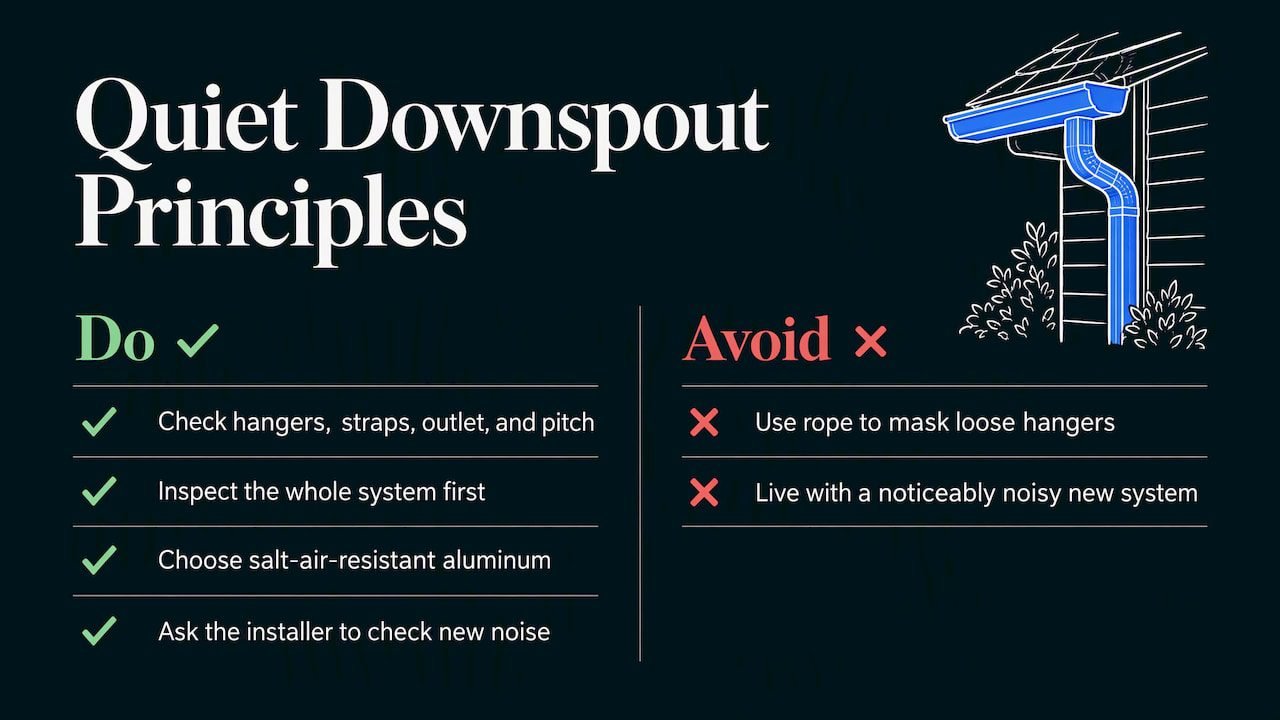
The material matters as well. We work with salt-air-resistant aluminum because coastal humidity and salt eat away at lesser metal, and corroded, loosened parts are one more source of rattles. And when a downspout is simply in the wrong place for your house, say, right under a bedroom window, it is often easier to relocate it than to muffle it.
Our approach is to tell you what we see, whether that is a ten-minute fix or a section that needs replacing, and to stay on the job until you are satisfied.
— Brian
When to call a professional
A DIY fix is reasonable when the noise is a drip or a single loose strap and you can reach it from the ground or a stable ladder. Call a gutter contractor when:
- The noise continues after you tighten the hardware and try a rope or dampener.
- Gutters sag, pull away from the fascia or have visible gaps at seams.
- Water overflows or pools near the foundation during rain.
- The downspout is on a second story or a steep roof, where a fall is a real risk.
- You find soft wood, stains or peeling paint behind the gutter line.
- Gurgling and backing up continue after you clear the visible clog, which suggests a problem in the underground drain line.
A pro will look at pitch, hanger spacing, outlet size and fascia condition in one visit. If the gutters are old, check our list of signs your gutters need replacing so you can decide whether repair or replacement makes sense. If the finish is the only issue, painting versus replacing gutters walks through the decision.
Keep it quiet: simple maintenance
Most noise problems come back when the basics are skipped. Twice a year, check hangers and straps, clear the outlets and elbows, and run a hose along the gutters to watch the flow. Our maintenance tips for seamless gutters and the seasonal gutter checklist lay out what to check and when to bring in help. Gutter guards can also cut the debris that causes gurgling clogs, and our article on whether gutter guards actually work explains what to expect.
Need a quieter, better-draining system?
If your downspouts are noisy and a quick fix has not helped, we can inspect the whole run, from hangers and pitch to outlet and fascia, and recommend the simplest repair that works. We handle downspout installation, gutter repair and storm damage restoration, and full seamless gutter installs, all built from durable, salt-air-resistant aluminum and designed for Florida weather. Our Lifetime No-Clog Guarantee and satisfaction-or-no-payment promise mean you are not left guessing.

Ready to stop the racket? Visit Five Star Aluminum to request an inspection of your gutters and downspouts.
FAQ
Why does my gutter make noise when it rains?
Most of the time it is water dripping onto a metal elbow or thin metal ringing under flow. Loose brackets and straps rattle in wind and rain, and partial clogs make water gurgle. Listen to the sound in steady rain to work out which one you have.
How do I quiet a downspout myself?
Tighten any loose hardware first. For dripping, run a 3/8-inch nylon rope from the gutter outlet to the elbow and secure it with gutter seaming caulk, leaving a small gap for water. Sponges can help for a night but should not stay in place, since they hold stagnant water.
Are rain chains a good way to silence a downspout?
They are much quieter and look good, but they struggle in exceptionally heavy rain. In a place with intense storms, they are better on small roof sections than as the only drainage for the whole house.
Can noisy downspouts mean something is wrong with my gutters?
Yes. Noise can point to loose gutters, broken hangers, incorrect pitch or downspouts draining toward the house. If you also see sagging, overflow or water pooling near the foundation, have a contractor check the system.
Is a gurgling downspout a clog?
Often, yes. Gurgling, spitting or water backing up suggests an obstruction in the downspout or the drain line it connects to. Clear what you can reach, and call a pro if the sound returns after the next rain.
Sources
- Guide To Quieting Gutters and Downspouts, Today’s Homeowner
- How to Quiet Gutters and Downspouts (DIY), Family Handyman
- Outdoor Paving Drainage Solutions: A Homeowner’s Guide
- Water Hammer in Pipes: Code Approved Fixes