

If your soffit vents are blocked, the fix depends on what is blocking them. Cobwebs, leaf debris and paint on the slots can be cleared from outside. Insulation packed into the eave, a missing baffle or solid wood behind the panel cannot, because the obstruction is hidden in the attic. Start by checking from inside the attic, then decide whether this is a cleaning job or a repair.
This guide explains how to tell the difference, how to clean soffit vents safely, and when a Florida home needs a professional to look at the soffit, fascia, gutters and attic ventilation together.
TL;DR
- Soffit vents are the air intake for your attic. If they are blocked, the exhaust vents at the roof cannot pull fresh air through, and heat and moisture build up.
- Cleaning the visible slots only helps when the blockage is on the surface. Blown insulation, missing baffles and solid backing behind the panel need a repair.
- Check from inside the attic with a flashlight. Look for daylight or an open air path at each eave bay.
- Call a professional for two-story homes, damaged panels, mold, wet insulation, rot or suspected nests. Do not pry panels off yourself in those cases.
- In Florida, treat soffit work as part of the whole roof edge: soffit, fascia, gutters and attic vents together.
Table of Contents
- Why blocked soffit vents matter
- Signs your soffit vents may be blocked
- Common causes of blocked soffit vents
- How to check from the attic
- What a proper fix looks like
- How to clean soffit vents safely
- Florida specifics: storms, salt air and code
- Do not forget other moisture sources
- Our perspective: look at the whole roof edge
- When to call a professional
- Soffit, fascia and ventilation help in Sarasota
- FAQ
- Sources
Why blocked soffit vents matter
A vented attic works like a loop. Cooler outside air enters at the soffits, rises as it warms, and leaves through ridge or other upper vents. Soffit vents are only the intake half of that system. If the intake is blocked, the exhaust has nothing to draw on.
The U.S. Department of Energy’s Consumer Guide to Durable Attics says blocked or inadequate ventilation can let moisture accumulate, damage wood, ruin insulation and contribute to mold. In Florida, where humid air is the norm for much of the year, that moisture has little chance to dry out once it is trapped.
There is an energy angle too. ENERGY STAR warns that an attic fan working against blocked soffit intake can pull conditioned air out of the house if the ceiling is not well air-sealed. Adding a fan to a blocked attic can raise energy use instead of solving the problem.
Signs your soffit vents may be blocked
You rarely see a blocked vent directly. You see what it causes. The DOE guide lists these warning signs:
- Wet insulation near the eaves
- Mold or mildew in the attic
- Warped or rotted attic wood
- Bubbled or peeling paint at the soffits or fascia
- Deteriorated shingles at the roof edge
You may also notice an attic that feels much hotter than usual, or an upstairs that is hard to cool. None of these proves the soffits are the cause. Water staining at the eaves can come from gutter overflow or a roof leak just as easily. If you see staining, our guide to gutter overflow in heavy rain shows a simple hose test to rule gutters in or out.
One caution: some homes are built with unvented (sealed) attics and do not need soffit intake at all. Do not add vents blindly. Find out which type of attic you have first.
Common causes of blocked soffit vents
| Cause | Where it hides | Can you clear it from outside? |
|---|---|---|
| Cobwebs, dust, leaf debris | On the surface of the perforated panel | Usually yes |
| Paint over the slots | Surface of the panel | Sometimes, with care |
| Insect or bird nests, wasps | Behind the panel | Not safely. Call a pro |
| Blown insulation in the eave | Attic side | No |
| Missing or fallen baffle | Attic side, at the top plate | No |
| Solid wood backing behind a perforated panel | Inside the cavity | No |
| Damaged or displaced panels | Eave | Needs repair or replacement |
The pattern matters. A common professional mistake is fixing the visible panel while leaving the hidden obstruction in place. A freshly cleaned soffit with solid wood behind it still moves no air.
How to check from the attic
The most reliable diagnosis is from inside, not from the ground. Looking up at a soffit tells you whether the slots are dirty. It does not tell you whether air can pass through them.
If your attic is safely accessible:
- Wear a dust mask, gloves and eye protection, and step only on joists or solid decking.
- Bring a bright flashlight and work along the eaves, one rafter bay at a time.
- Confirm the soffit opening is actually open behind the panel. On a bright day you may see daylight at the vent.
- Check that insulation has not filled the eave or slumped against the roof deck.
- Look for a baffle at each soffit vent. The Building America Solution Center advises making sure baffles are in place to keep wind from blowing insulation, and installing them if missing.
- Confirm the air path continues upward toward the ridge or upper vents.
If you cannot get into the attic, the home has two stories, or you find mold, wet insulation, rot or signs of nesting, stop there and bring in a qualified exterior professional. Opening panels from a ladder on a damaged eave is how small jobs become falls and wasp stings.
What a proper fix looks like
Baffles and insulation
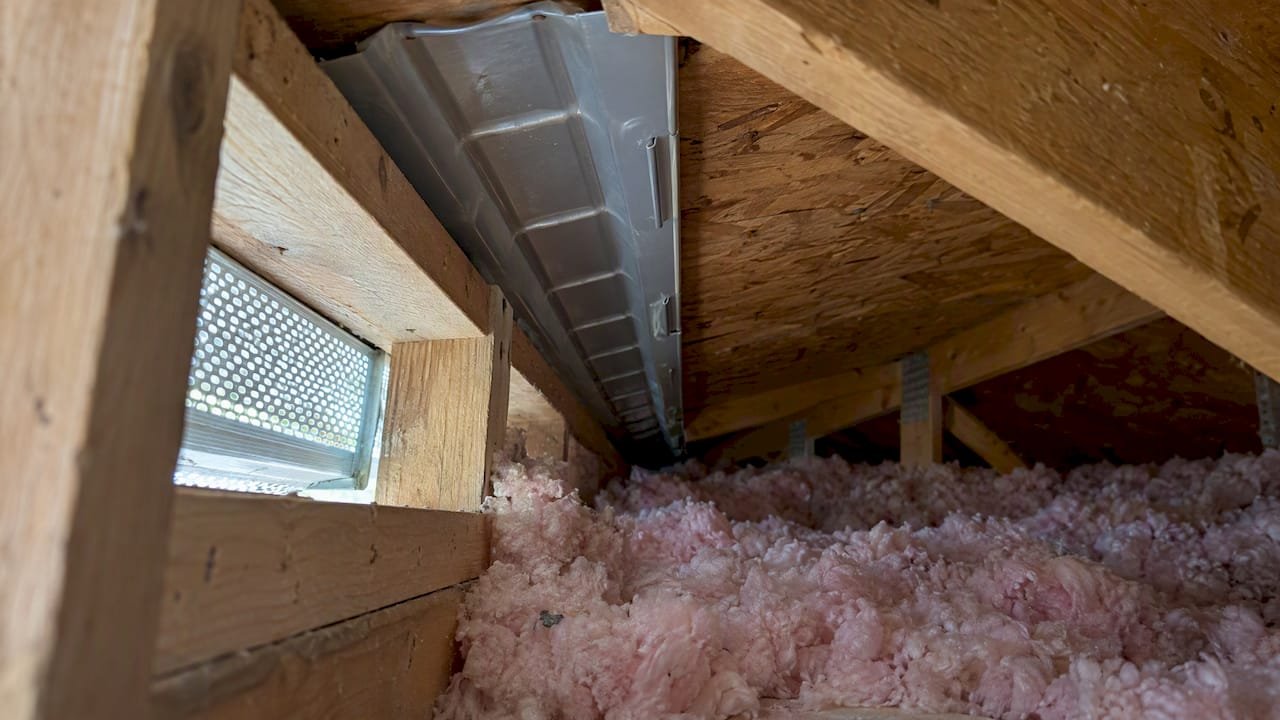
ENERGY STAR identifies blocked airflow at the eaves as the most common mistake when installing insulation. The guidance is to never cover soffit vents with insulation, and to use rafter vents or baffles so outside air can travel from the soffit to the upper exhaust while insulation stays continuous at the eaves.
PNNL guidance says a baffle should sit at each soffit vent or relevant rafter bay, extending from the top plate toward the roof deck and keeping at least a 2-inch airflow space above the insulation. Baffles can be plastic, cardboard or metal, and the right one depends on your framing. Sealing the lower edge at the top plate also reduces wind washing and air leakage.
Cutting open solid soffit cavities
Some older homes have a perforated panel fastened over solid blocking. The vent looks real but moves no air. The fix is to open the blocked cavity from the exterior or attic, add proper vent openings, and refinish the soffit. This is carpentry, not cleaning, and it often involves the fascia and gutter line as well.
Replacing damaged panels
Cracked, sagging or rotted soffit panels and fascia let in rain, insects and nesting animals. If the panels are damaged, cleaning is the wrong answer. Our guide to soffit and fascia replacement walks through the DIY versus professional decision, and soffit vs fascia explains how the two parts work together to keep moisture out of the attic.
How to clean soffit vents safely
When the problem really is surface debris, a careful cleaning helps. Keep it gentle.
- Start dry. Use a soft brush or a broom with a long handle to knock down cobwebs and loose dirt. Work from a stable ladder or from the ground if you can reach.
- Use low-pressure air or a shop vacuum. A blast of compressed air or a vacuum with a brush attachment clears slots without pushing debris deeper.
- Rinse lightly if needed. A garden hose on a gentle setting can rinse away dust. Avoid high-pressure washing. It can force water and grit behind the panel, bend aluminum or vinyl, and soak insulation.
- Never force debris inward. After storms, inspect for damaged screens, displaced panels, nests and water entry rather than pushing material further into the attic, as Building America guidance on roof venting suggests.
- Recheck from the attic. If the slots look clean outside but the attic still feels stuffy or damp, the blockage is hidden.
White or black growth on the panels is a different problem. Moisture is feeding it, and scrubbing alone will bring it back. See our guide on mold on soffits for fixing moisture first and cleaning second.
Florida specifics: storms, salt air and code
Florida adds constraints that a generic how-to will not mention. Wind-driven rain is a real threat to any opening in the roof edge. Building America guidance on disaster-resistant roof venting says vents should resist wind and water intrusion, and it points to Florida Building Code TAS 100(A) certification for upper roof vents. The goal is airflow without creating an easy path for rain, pests or salt-laden air.
Attic and roof ventilation is also governed by code. Chapter 31 of the 2023 Florida Building Code, Residential covers vents, and enforcement is local. If you are altering soffits, roof vents or the attic assembly in the Sarasota area, a contractor should confirm the current code edition and any permit requirement for your scope of work before starting.
For material choice, salt air is hard on cheap fasteners and bare metals. Rust-resistant aluminum and vinyl soffit panels with insect screening hold up better near the Gulf. For a deeper look at sizing and budgeting, see our Florida attic ventilation cost guide and the 1:300 rule.
Do not forget other moisture sources
Unblocking soffits will not fix a moisture source inside the house. The DOE guide warns that bathroom, kitchen or dryer exhaust vented into the attic is a separate moisture problem that should be corrected. If your attic is damp and the soffits are open, look at where those fans discharge.
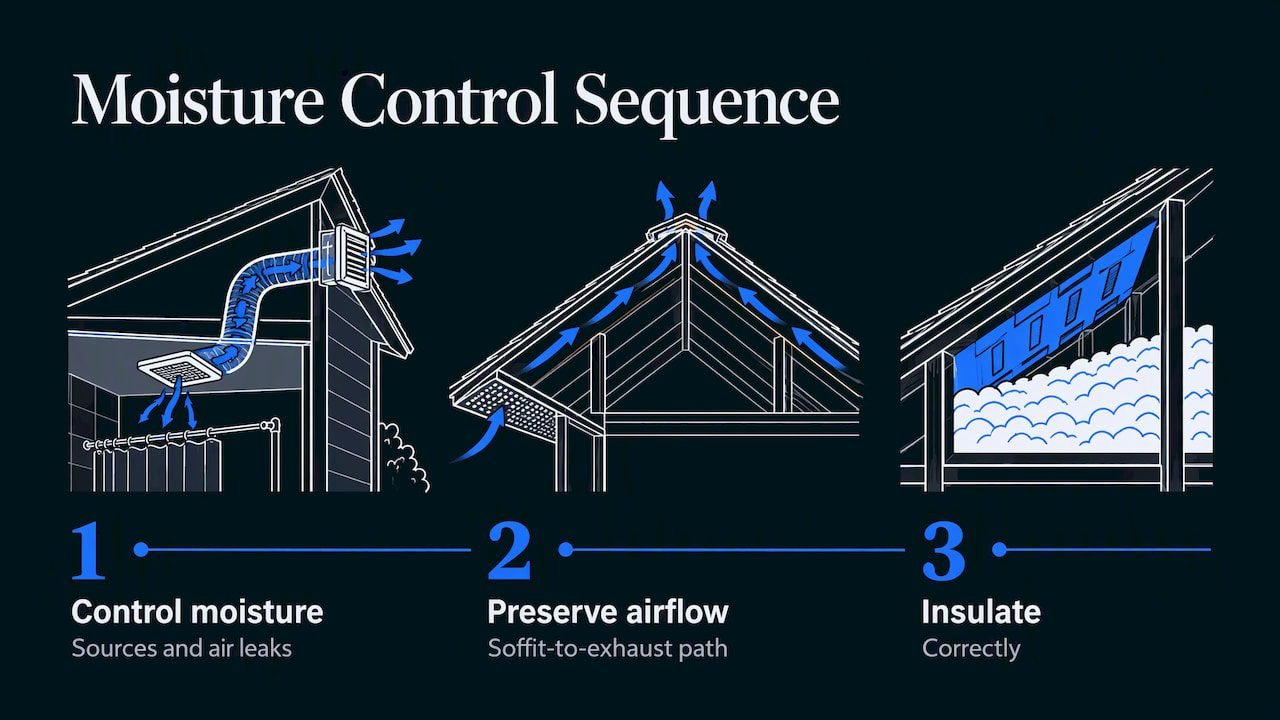
The order that makes sense is the one the DOE and PNNL guidance points toward: control moisture sources and air leaks, preserve the soffit-to-exhaust path, then insulate correctly.
Our perspective: look at the whole roof edge
After more than 20 years working on Florida homes, we see the same pattern. A homeowner calls about a gutter that overflows or a soffit with peeling paint, and the real story is wider. The gutter has been dumping water against the fascia, the fascia has softened, the soffit has stained, and the attic behind it has not been breathing properly for years.
That is why we do not treat a blocked soffit as an isolated cleaning job. Our crews look at the soffit, fascia, gutters, downspouts and attic ventilation together, so the repair addresses the source of the problem rather than the part that happens to be visible. If a soffit only needs a gentle cleaning, we will say so. If the cavity behind it is solid, or the panels are failing, a cleaning would only hide the problem for a season.
We also build for the coast. Salt-air-resistant aluminum and vinyl, custom-fitted pieces and clean seams matter more here than in a dry climate. And we stand behind the work: we do not leave a job site until you are satisfied, and if you are not, you do not pay.
— Brian
When to call a professional
Call a qualified exterior contractor rather than working on it yourself when:
- The home has two stories or the eaves are hard to reach safely
- Panels are cracked, sagging, stained or rotted
- You see mold, wet insulation or warped attic wood
- You hear or see nesting animals or wasps
- Insulation has covered the eave and baffles are missing
- You are not sure whether the attic is vented or sealed
Exterior cleaning can handle cobwebs and loose debris. It cannot correct concealed framing, missing baffles, damaged panels or an improper exhaust design.
Soffit, fascia and ventilation help in Sarasota
Five Star Aluminum serves homeowners in Sarasota and nearby counties. If your soffits are damaged or you suspect poor attic airflow, our team can inspect the roof edge and recommend the right fix. Our soffit and fascia repair covers damaged and rotted panels, and soffit and fascia installation is the option when the old system needs to be replaced. We also handle attic ventilation improvement, gutters and downspouts. See all our services or contact us to schedule an inspection.
FAQ
How can I unblock my soffit vents?
For surface debris, brush off cobwebs, use low-pressure air or a vacuum, and rinse gently. If insulation, a missing baffle or solid wood is behind the panel, the fix is a repair from the attic or after removing the panel, and a professional should do it.
Should soffit vents be cleaned?
Yes, as part of routine exterior upkeep, especially after storm season. Cleaning keeps the slots from clogging, but it only helps if air can pass behind the panel. Check from the attic occasionally to confirm.
What problems can blocked soffit vents cause?
Trapped moisture can lead to mold, wet insulation, rotted wood and peeling paint at the eaves, according to the DOE durable attics guide. Heat buildup can also make the home harder to cool.
How can I tell whether my soffits are blocked?
The best test is from inside the attic with a flashlight. Look at each eave bay for an open path, daylight at the vent, and a baffle holding insulation back. From the ground you can only judge surface dirt.
Do I need a permit to fix soffits in Florida?
It depends on your jurisdiction and the scope of work. Ventilation is governed by the Florida Building Code and enforced locally, so confirm requirements with your contractor or local building department before altering vents or the attic assembly.
Sources
- About Attic Ventilation, ENERGY STAR
- Consumer Guide to Durable Attics, U.S. Department of Energy
- Baffles, Building Science Education Solution Center
- Look For and Install Attic Vent Baffles, Building America Solution Center
- Blown Insulation for Existing Vented Attic, Building America Solution Center
- Disaster-Resistant Roof Venting, Building America Solution Center
- 2023 Florida Building Code, Residential, Chapter 31: Vents